QingAD 1644–1912
The Jintian Uprising and Founding of the Taiping Heavenly Kingdom
11 January 1851
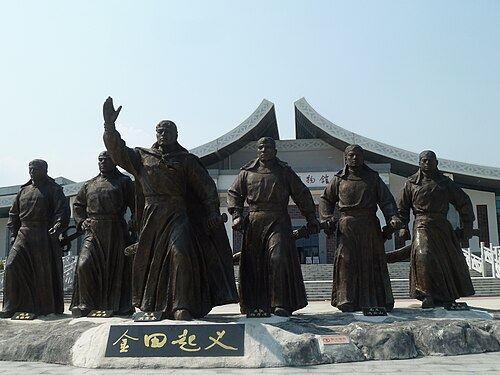
On 11 January 1851 Hong Xiuquan, founder of the God Worshippers’ Society, launched an uprising at Jintian village in Guiping, Guangxi, and proclaimed the Taiping Heavenly Kingdom.
View on the timeline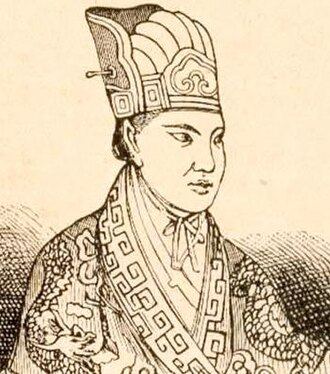
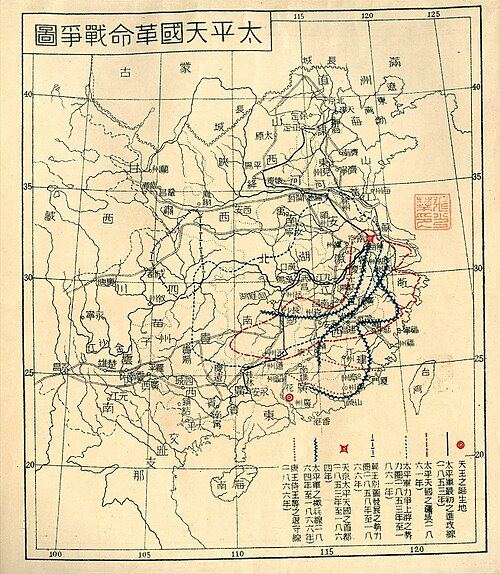
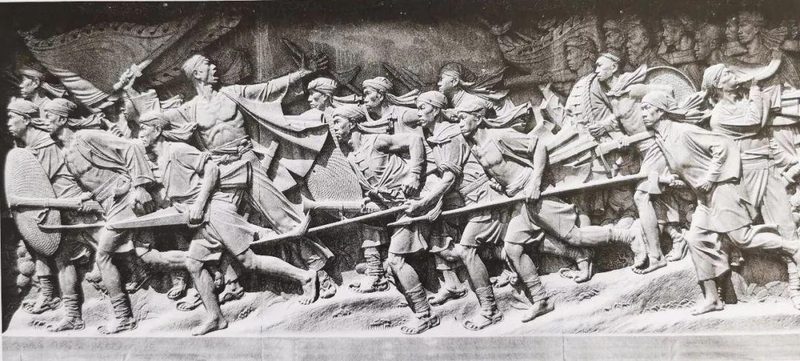
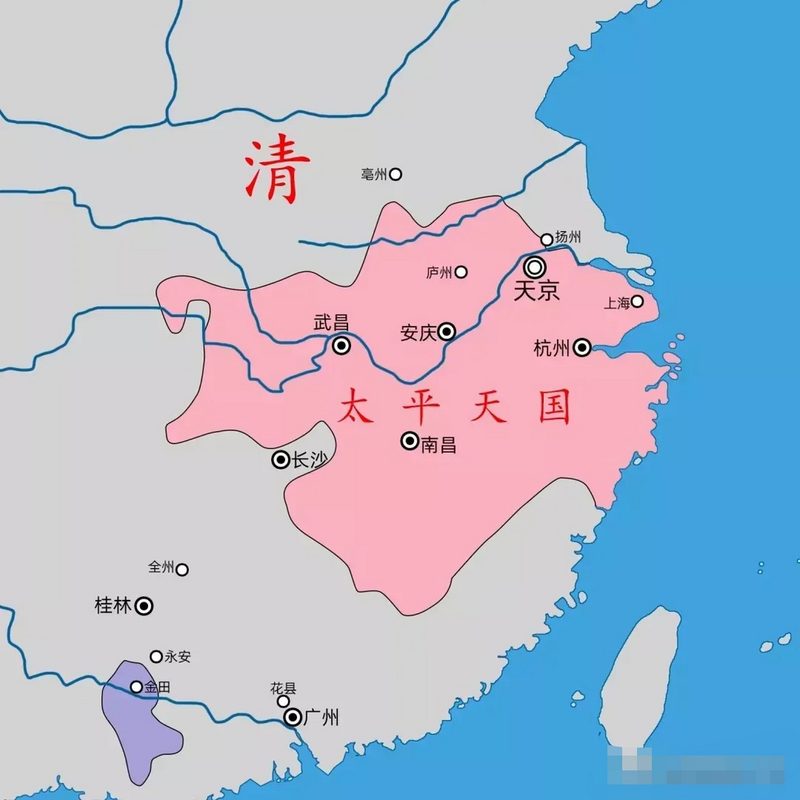
After the Opium War the Qing government squeezed the people harder to pay indemnities and military costs, and imported foreign goods hit the natural economy and ruined many craftsmen. Social tensions sharpened and peasant resistance broke out repeatedly. Hong Xiuquan (1814–1864), from Huaxian, Guangdong, a peasant’s son, failed the civil service examinations several times. Influenced by the Christian missionary pamphlet Good Words to Admonish the Age, in 1843 he founded the “God Worshippers’ Society,” preaching equality for all. He and fellow villager Feng Yunshan went to Guangxi to preach; Feng won followers among poor peasants and charcoal burners in the Zijing Mountains of Guiping, and Yang Xiuqing, Xiao Chaogui, Shi Dakai, Wei Changhui and others joined. Hong also wrote works such as Original Exhortation to Awaken the World, setting out the idea that “all men under heaven are brothers and all women are sisters.” In 1850 he called followers to assemble at Jintian village, gathering about 20,000. On 11 January 1851 he launched the uprising there, proclaiming the “Taiping Heavenly Kingdom”; the rebel army was called the “Taiping Army.” In March he took the title Heavenly King. In September the Taiping army captured Yong’an (present-day Mengshan, Guangxi), and in December it enfeoffed kings there: Yang Xiuqing as East King, Xiao Chaogui as West King, Feng Yunshan as South King, Wei Changhui as North King and Shi Dakai as Assistant King, establishing a rudimentary government. The Jintian Uprising opened the Taiping movement, the largest peasant war in Chinese history, which lasted fourteen years and spread to eighteen provinces.
References
Text and images from Wikipedia are used under CC BY-SA and their respective licenses