QingAD 1644–1912
Sino-Russian Treaty of Nerchinsk
1689
In 1689 China and Russia signed the Treaty of Nerchinsk after equal negotiation, fixing the eastern border and confirming the Heilongjiang and Ussuri basins, including Sakhalin, as Chinese.
View on the timeline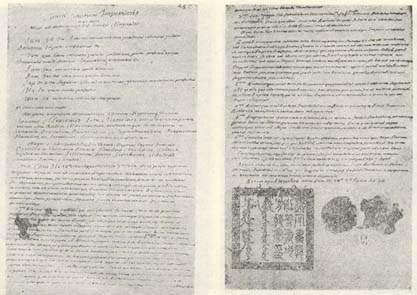
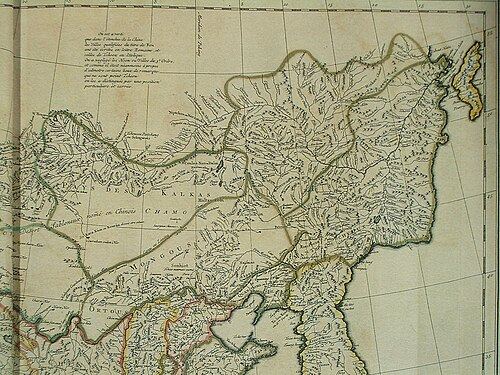
After the sieges of Albazin, Russia was forced to agree to negotiate the eastern Sino-Russian border. In 1689 a Qing delegation headed by Songgotu, Minister of the Imperial Bodyguard, and a Russian delegation headed by Fyodor Golovin held talks at Nerchinsk. At first the Russians proposed the Heilongjiang as the border, which the Qing side rejected. To win peace on the eastern border, the Qing made concessions, agreeing to hand Russia land around Nerchinsk that had belonged to China. After equal negotiation, the two sides signed the Treaty of Nerchinsk in September 1689. It provided that the border ran from the Gorbitsa River, a tributary of the Heilongjiang, to the Outer Xing'an (Stanovoy) Range and on to the sea, with land south of the range Chinese and north of it Russian; in the west the Argun River was the boundary, with the south bank Chinese and the north Russian; Russia was to destroy the fort at Albazin and withdraw its troops. The treaty also allowed subjects of both countries with passports to cross the border and trade. The Latin text was the official text, and border markers were set up inscribed in five languages: Manchu, Chinese, Russian, Mongolian and Latin. The treaty was the first border treaty between China and Russia and the first equal treaty between China and a foreign country with the meaning of modern international law; it legally confirmed that the vast area of the Heilongjiang and Ussuri basins, including Sakhalin, was Chinese territory, and kept the eastern border stable for over 160 years. In 1858 and 1860 Russia, taking advantage of the Qing's weakness, seized over a million square kilometers of Chinese territory south of the Outer Xing'an Range and east of the Ussuri through the Treaty of Aigun and the Convention of Peking.
References
Text and images from Wikipedia are used under CC BY-SA and their respective licenses