MingAD 1368–1644
Building Beijing and the Forbidden City
1406–1420
The Yongle Emperor ordered Beijing's palaces built in 1406; they were largely complete in 1420 and the capital moved in 1421. The Forbidden City is the largest surviving palace complex.
View on the timeline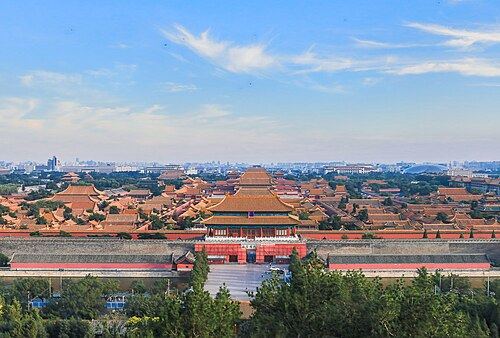
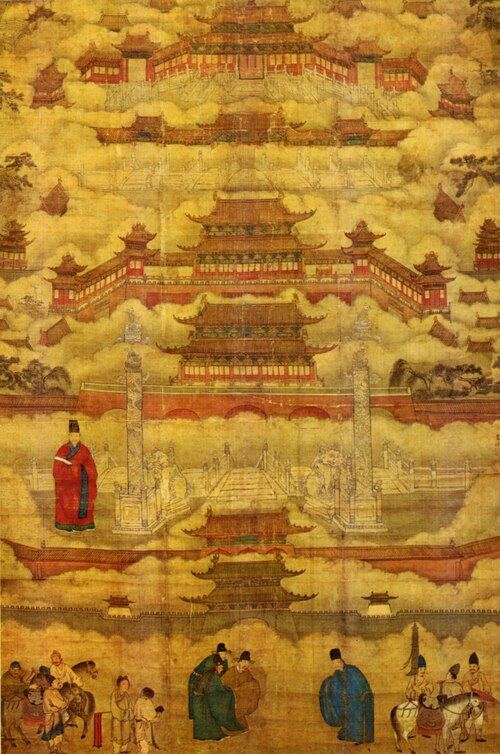
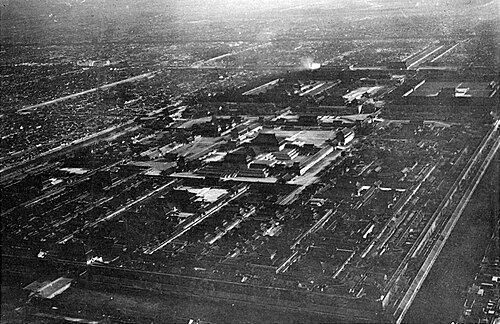
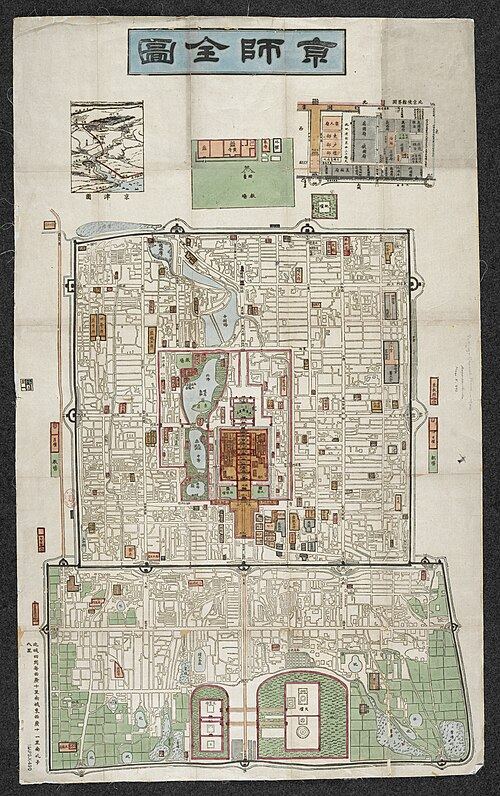
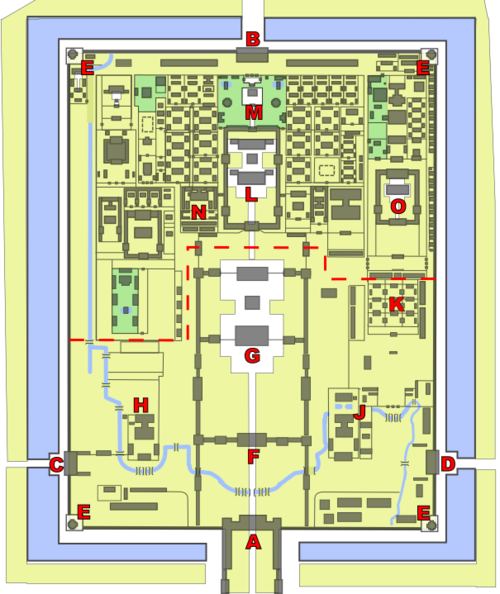
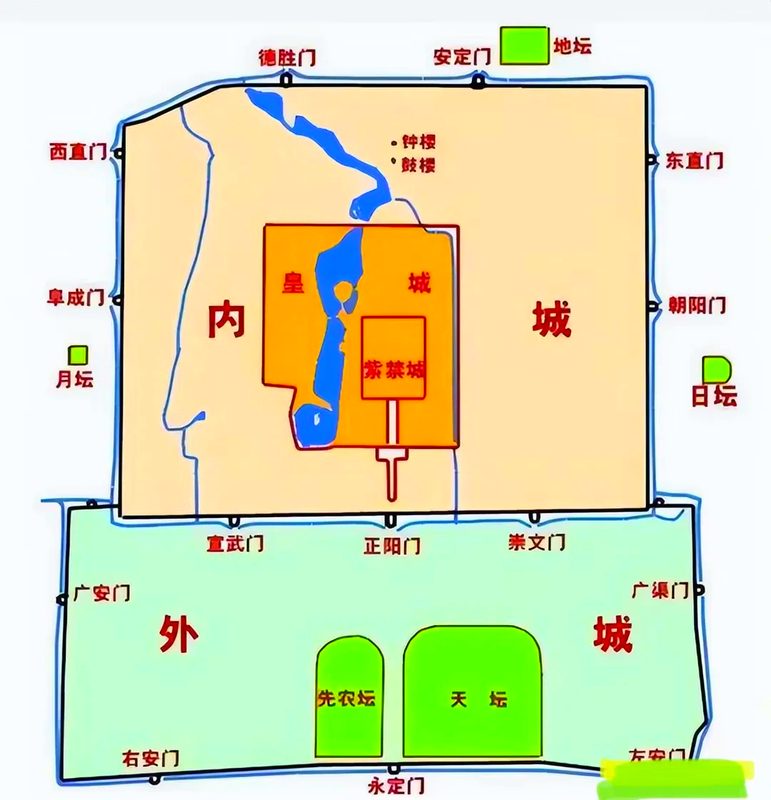
After taking the throne, the Yongle Emperor Zhu Di decided, to strengthen the northern defenses, to move the capital to Beiping, the base of his rise, renaming it Beijing in 1403. In 1406 he ordered the construction of the Beijing palaces, gathering skilled craftsmen and large numbers of laborers from across the country and cutting precious timber such as nanmu in Sichuan, Huguang, Jiangxi and elsewhere. After over ten years of preparation and building, the palaces and city walls were largely complete in 1420, and the Ming formally moved its capital to Beijing in 1421. Beijing was rebuilt on the basis of the Yuan capital Dadu, symmetrical about a north-south central axis, with the palace city (the Forbidden City) at the center, surrounded by the Imperial City and the Inner City, embodying the traditional planning idea of "ancestral temple on the left, altar of the soil on the right"; in the mid-Ming an outer city was added, giving the city its "convex" shape. The Forbidden City covers about 720,000 square meters with a floor area of about 150,000 square meters, with over seventy palaces and nearly 9,000 rooms, surrounded by walls and a moat. It is divided into the Outer Court and the Inner Court: the Outer Court, centered on the Halls of Supreme Harmony, Central Harmony and Preserving Harmony, was where the emperor held great ceremonies and handled government; the Inner Court, centered on the Palace of Heavenly Purity, the Hall of Union and the Palace of Earthly Tranquility, was the residence of the emperor and his consorts. The palaces, with yellow glazed tiles, red walls and painted beams, are magnificent and show the high level of ancient Chinese architecture. Twenty-four emperors of the Ming and Qing lived and ruled here.
References
Text and images from Wikipedia are used under CC BY-SA and their respective licenses