Eastern HanAD 25–220
Battle of Red Cliffs
AD 208
In AD 208 the allied forces of Sun Quan and Liu Bei used fire attack at Red Cliffs to defeat Cao Cao's army of over 200,000; Cao Cao withdrew north, setting the stage for the Three Kingdoms.
View on the timeline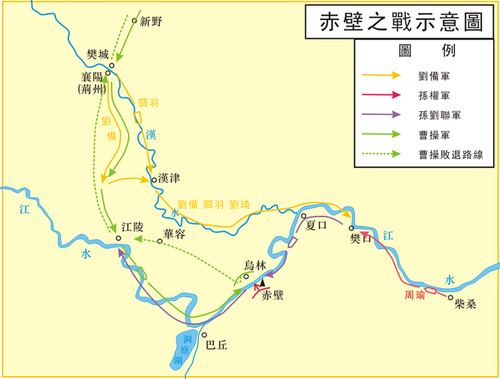
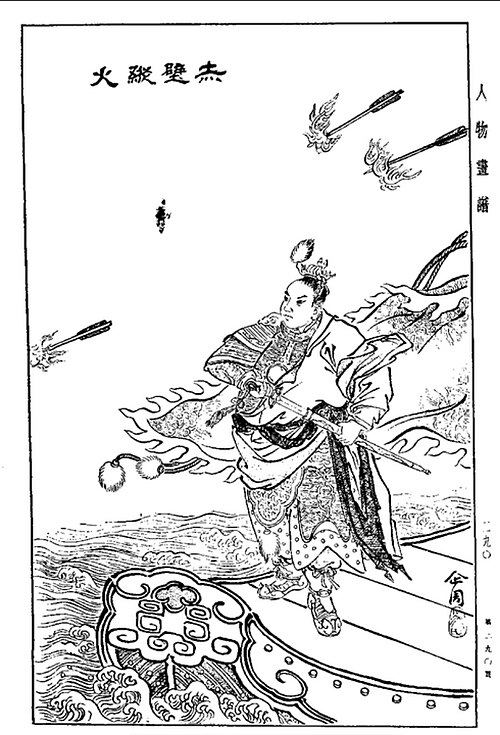
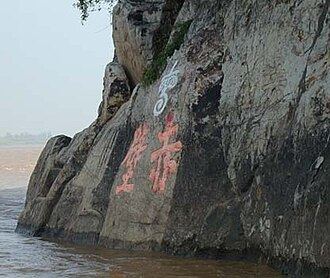
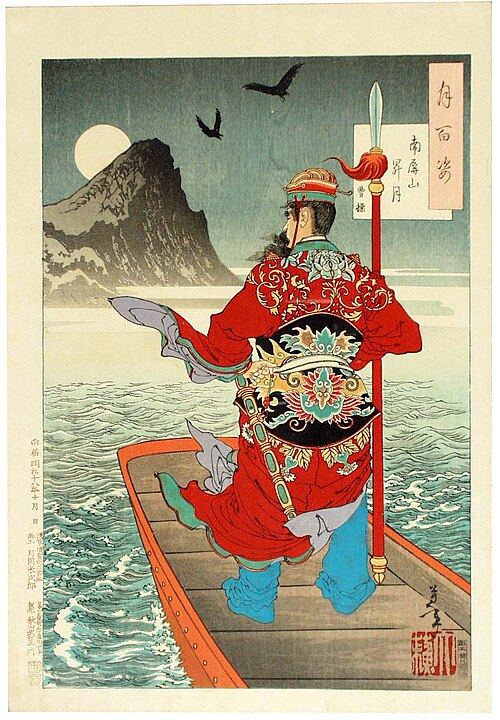
After unifying the north, Cao Cao marched south in AD 208 intending to destroy the southern powers and unify the country. Earlier, Liu Bei had won over Zhuge Liang, who set out the strategy of allying with Sun against Cao. When Cao Cao came south, Liu Biao, governor of Jing Province, died and his son Liu Cong surrendered; Cao's army took Jing Province, and Liu Bei withdrew from Fancheng to Xiakou. Liu Bei sent Zhuge Liang to Chaisang to contact Sun Quan. Heeding Zhou Yu, Lu Su and Zhuge Liang, Sun Quan resolved to ally with Liu Bei against Cao and appointed Zhou Yu as commander. Cao's army was claimed to be 800,000 but was actually over 200,000, while the Sun–Liu force was only about 50,000; the two sides faced each other at Red Cliffs (generally thought to be on the south bank of the Yangtze northwest of present-day Chibi, Hubei). Cao's troops had marched far and were weary; many were northerners unused to naval war and the climate, and disease spread in the camp. They lost the first clash and withdrew to Wulin on the north bank, where Cao Cao chained his warships bow to stern. Zhou Yu's subordinate Huang Gai, noting this, proposed a fire attack and a feigned surrender to Cao Cao. Huang Gai led ships loaded with oil-soaked brush before the southeast wind toward Cao's camp and set them alight as they closed; the burning ships drove into the fleet, the fire spread quickly to the camps ashore, and Cao's army suffered heavy losses. The allies pursued, and Cao Cao retreated north with his remnants by the Huarong Road. Red Cliffs is a famous battle in which the weaker side won. Afterward Cao Cao was unable to move south for a time, Sun Quan consolidated his rule in Jiangdong, and Liu Bei took parts of Jing Province and expanded west, laying the basis for the Three Kingdoms.
References
Text and images from Wikipedia are used under CC BY-SA and their respective licenses