Eastern HanAD 25–220
Battle of Guandu
AD 200
In AD 200 Cao Cao defeated a far larger force at Guandu, raiding Wuchao to burn Yuan Shao's grain and crushing his main army, which laid the basis for unifying the north.
View on the timeline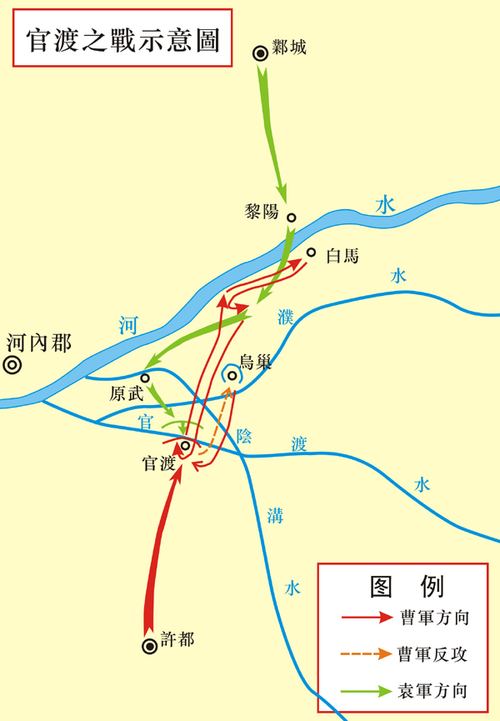
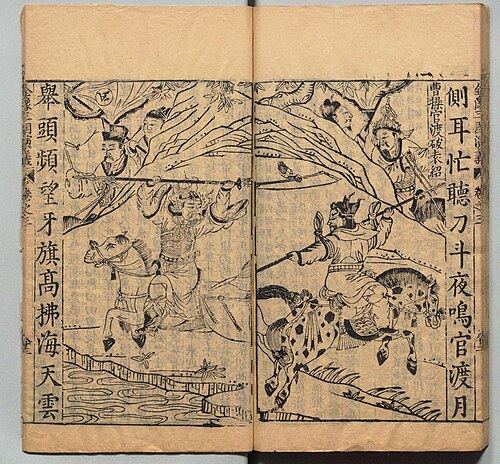
At the end of the Eastern Han, warlords fought for control after the Yellow Turban Rebellion. Cao Cao, who held Yan and Yu provinces, sought the political initiative and in AD 196 brought Emperor Xian from Luoyang to Xu (east of present-day Xuchang, Henan), commanding the realm in the emperor's name, “holding the emperor to command the lords.” He recruited talent widely, promoting by ability regardless of origin, and ran military farms in which soldiers and refugees tilled land, which both settled many refugees and secured ample army grain, steadily growing his strength. Yuan Shao, who held the four provinces of Ji, Qing, You and Bing, was of a famous family with many troops and plentiful grain, and was the strongest warlord in the north. Both wanted to absorb the other and dominate the north. In AD 200 Yuan Shao led 100,000 men south against Cao Cao's base at Xu. Cao Cao, with fewer troops and less grain, led his main force to build fortifications at Guandu (northeast of present-day Zhongmou, Henan) and held the line for months. Yuan Shao's adviser Xu You, whose advice was rejected, defected to Cao Cao and told him that Yuan's grain was stored at Wuchao with lax defense. Cao Cao decided at once, led 5,000 elite troops under Yuan's banners in a night raid on Wuchao, and burned all the grain. When news came, Yuan's army fell into panic, generals such as Zhang He surrendered to Cao Cao, the main army collapsed, and Yuan Shao fled back to Hebei with only some 800 horsemen. Guandu is a famous case of victory against the odds in Chinese history. Yuan Shao died soon after in despair, and over the next few years Cao Cao destroyed the remaining Yuan forces and defeated the Wuhuan, largely unifying the north and laying the base for Cao Wei's strength in the Three Kingdoms.
References
Text and images from Wikipedia are used under CC BY-SA and their respective licenses