Eastern HanAD 25–220
Buddhism Arrives and the White Horse Temple
Reign of Emperor Ming of Eastern Han
Buddhism reached China along the Silk Road around the turn of the Western and Eastern Han; under Emperor Ming the White Horse Temple was built at Luoyang, regarded as the first state-built temple.
View on the timeline
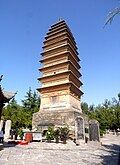
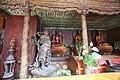
Buddhism, one of the world's three major religions, was founded in the 6th–5th century BC by Siddhartha Gautama (Shakyamuni), a prince of ancient India. It holds that life is full of suffering and that liberation comes only by cutting off desire and affliction; it teaches the equality of all beings, which appealed to poor people yearning for peace, and so spread widely. After Zhang Qian's mission, Buddhism gradually entered China through Central Asia along the Silk Road, and records say sutras were already being transmitted orally in the late Western Han. Tradition says Emperor Ming of the Eastern Han dreamed of a golden man and sent envoys to the Western Regions to seek the teaching; among the Yuezhi they met the Indian monks Kashyapa Matanga and Dharmaratna, and returned to Luoyang in the tenth year of Yongping (AD 67) with sutras and images on a white horse. In AD 68 the emperor ordered a monastery built outside the Yong Gate on the west of Luoyang, and named it the White Horse Temple in memory of the horse that carried the scriptures. It is regarded as the first temple built by the government after Buddhism entered China, honored as the “ancestral court” and “source of Buddhism” in China; thereafter Chinese monasteries were generally called si. Here Kashyapa Matanga and Dharmaratna translated the Sutra in Forty-Two Sections, thought to be the earliest surviving Chinese Buddhist translation. It became widespread only in the Wei, Jin and Northern and Southern Dynasties. It enriched Chinese culture, deeply influencing thought, literature, architecture, sculpture, painting and music, and many Chinese expressions, such as “cause and effect” and “repentance,” come from Buddhist texts.

References
Text and images from Wikipedia are used under CC BY-SA and their respective licenses