Eastern HanAD 25–220
Eastern Han Founded: the “Guangwu Restoration”
AD 25 · Xin → Eastern Han
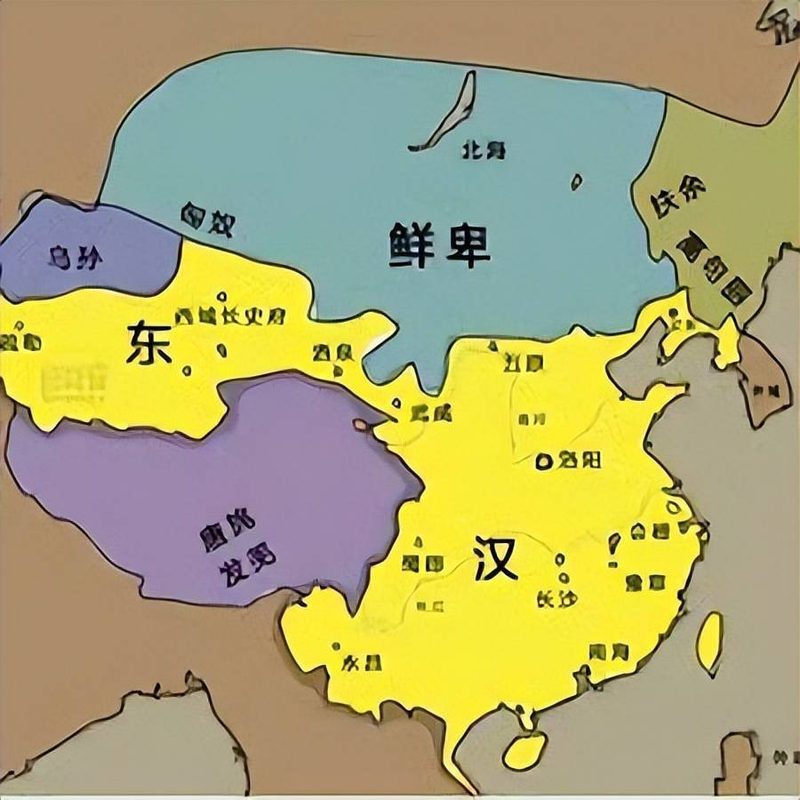
Liu Xiu proclaimed himself emperor in AD 25 and made Luoyang his capital, founding the Eastern Han; freeing slaves, cutting taxes and trimming offices, he brought stability, the “Guangwu Restoration.”
View on the timeline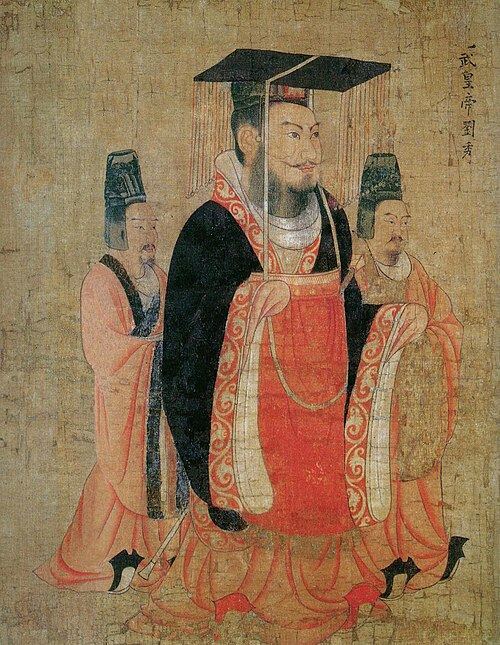
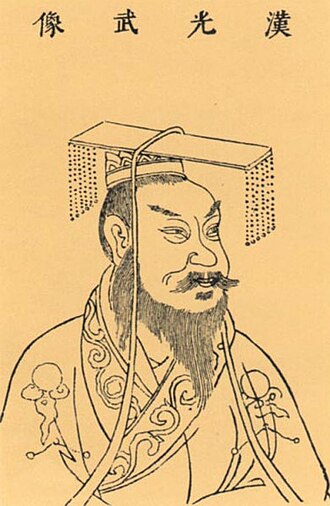
After peasant uprisings overthrew Wang Mang, separatist forces rose everywhere. Liu Xiu, a ninth-generation descendant of Liu Bang (Emperor Gaozu) and of Emperor Jing's line, rose with his elder brother Liu Yan at Nanyang at the end of Xin and joined the Lülin army. In AD 23 at the Battle of Kunyang he broke the siege with a small force and, striking with the garrison inside the city, defeated Wang Mang's army of several hundred thousand, winning great fame. He was then sent to manage Hebei, where he gradually built up his strength. In AD 25 Liu Xiu proclaimed himself emperor at Hao (north of present-day Baixiang, Hebei), keeping the Han name, and soon made Luoyang his capital. Because Luoyang lay east of the Western Han capital Chang'an, the dynasty is called the Eastern Han, and Liu Xiu was Emperor Guangwu. Over the next dozen or so years he destroyed the Red Eyebrows and warlords such as Wei Xiao and Gongsun Shu, reuniting the country. To consolidate rule, he repeatedly freed slaves and banned their mistreatment; cut the land tax back to the early Western Han rate of one-thirtieth; eased punishments; merged commanderies and counties, cut officials, tightened supervision and punished corrupt officials; weakened the Three Excellencies and concentrated real power in the Imperial Secretariat; “retired meritorious generals and promoted civil officials,” promoted Confucianism and education; and allowed northern peoples to move inward, easing ethnic tensions. After thirty-odd years of governance, society was fairly stable by the end of his reign, the economy recovered, and the population grew; this is known as the “Guangwu Restoration.” His successors Emperors Ming and Zhang continued similar policies, and the state grew stronger still, in the “Rule of Ming and Zhang.”
References
Text and images from Wikipedia are used under CC BY-SA and their respective licenses