XinAD 9–23
Wang Mang Founds the Xin Dynasty
AD 9 · Western Han → Xin
Wang Mang, a consort-clan official of the late Western Han, deposed the Han in AD 9 and founded Xin; his idealizing reforms caused unrest and he fell in peasant uprisings.
View on the timeline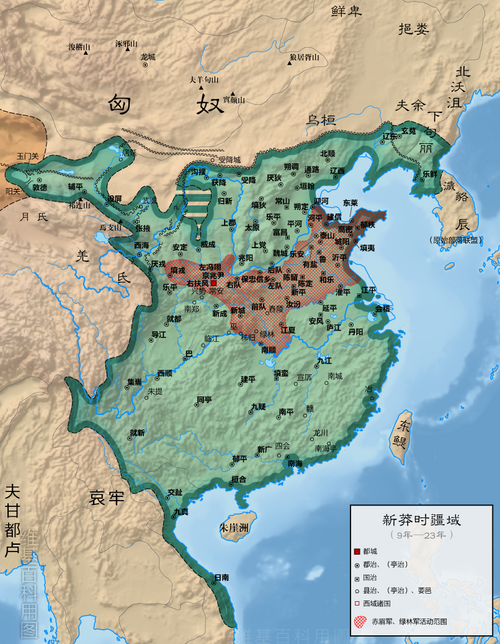
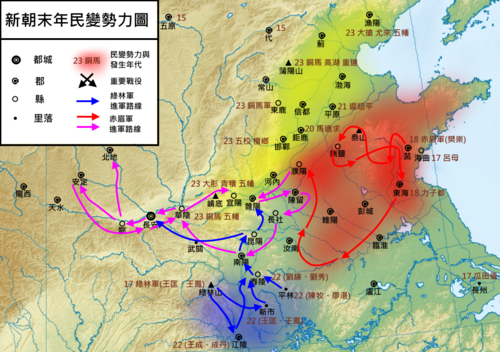
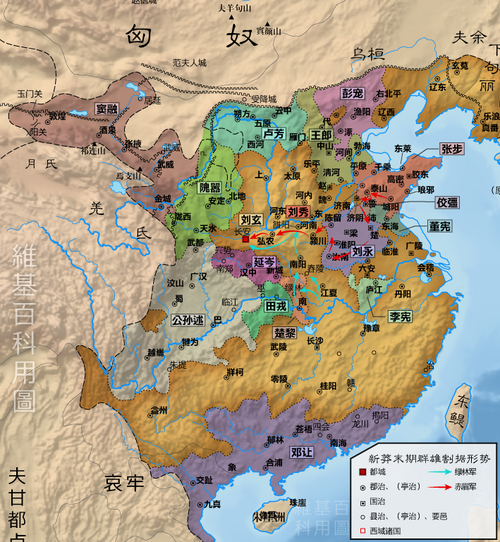
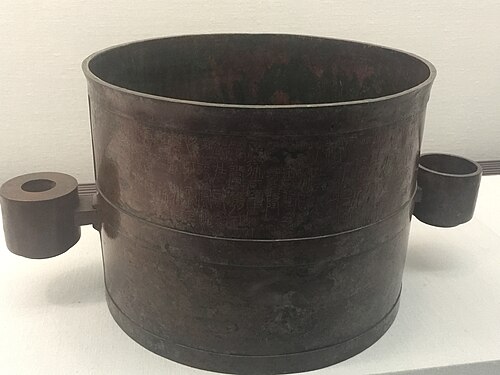
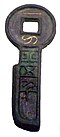
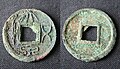
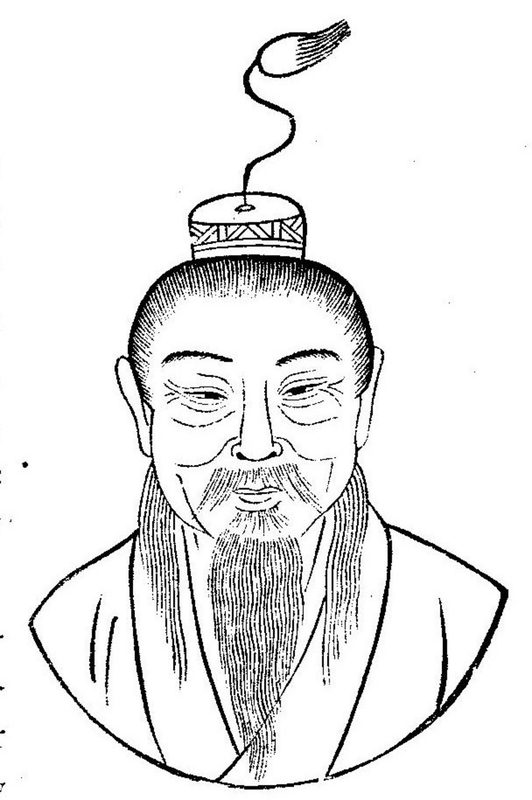
In the late Western Han, land annexation was severe, many peasants lost their land and became vagrants or slaves, and the court grew corrupt, with emperors either weak or very young and consort clans and eunuchs taking power in turn. Wang Mang came from the Wang consort clan; his aunt Wang Zhengjun was Emperor Yuan's empress. In youth he lived frugally and courted scholars, winning a fine name. After Emperor Ai died, Wang Mang became Commander-in-Chief and took charge of government, enthroning Emperor Ping and then the child Ruzi Ying. Using Confucian texts and omens to shape opinion, he deposed the Han in AD 9 and renamed the state “Xin.” As emperor he carried out a series of reforms under the banner of restoring Zhou institutions, known as “Wang Mang's reforms.” All land was renamed “royal land,” banned from sale and redistributed by population; slaves were renamed “private retainers” and could not be traded; under the “five equalizations and six monopolies” the state controlled salt, iron, liquor, coinage and market prices; the currency was changed repeatedly; official and place names were altered often, and the titles of neighboring peoples' chiefs were lowered, causing border conflicts. These measures were impractical and constantly revised; they failed to solve the land and slavery problems and left society more chaotic, and with years of flood and drought the people suffered greatly. From about AD 17, uprisings such as the Lülin and Red Eyebrows broke out. In AD 23 the Lülin army defeated Wang Mang's main force in the Battle of Kunyang against the odds, then entered Chang'an; Wang Mang was killed in the fighting and the Xin ended after only fifteen years. It is regarded as a failed reform, though some modern scholars assess its ideas differently.
References
Text and images from Wikipedia are used under CC BY-SA and their respective licenses