Neolithicc. 10,000 years ago–2070 BC
Liangzhu Ancient City
c. 5,300–4,300 years ago
The Liangzhu city in Yuhang, Hangzhou, c. 5,300–4,300 years ago, with palaces, inner and outer cities and a huge water system, shows an early state on the lower Yangtze.
View on the timeline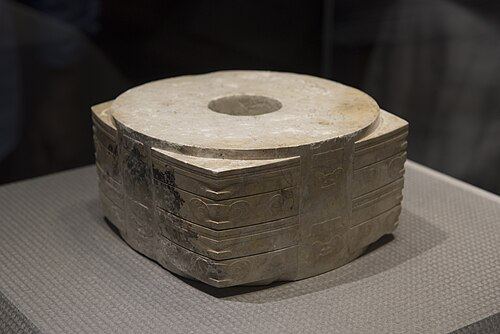
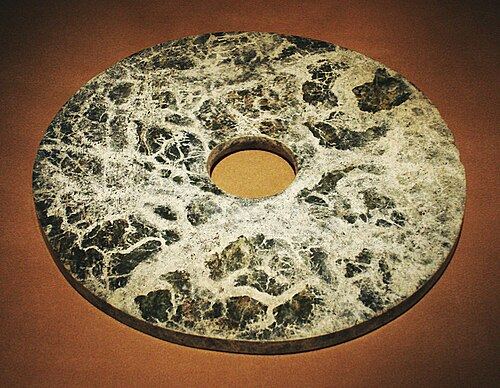
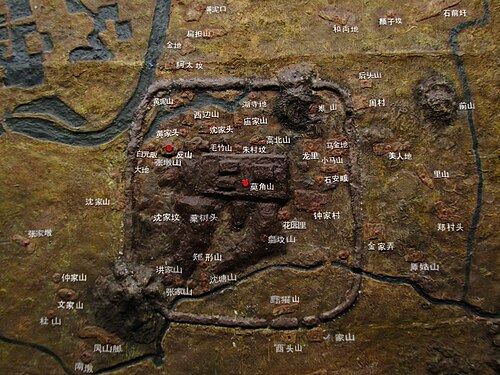
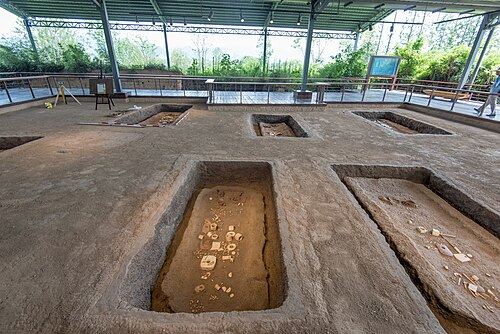
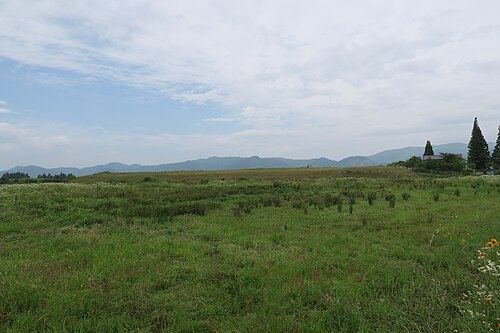
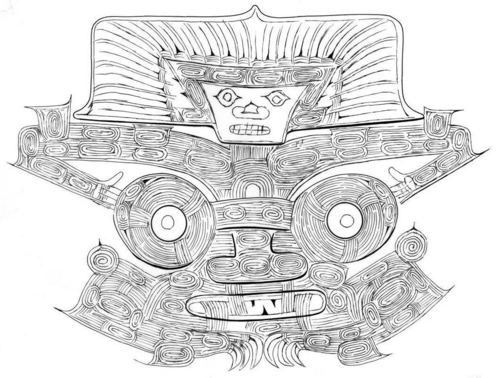
The Liangzhu site is in Yuhang District, Hangzhou, Zhejiang, first discovered by Shi Xingeng in 1936. The Liangzhu culture, centered on the ancient city, dates to about 5,300–4,300 years ago and spread around Lake Tai. In 2007 archaeologists confirmed the city walls. The city consists of a palace area, an inner city and an outer city; the inner city covers about 3 million square meters, and with the outer city about 6.3 million. At its center stands the artificially built Mojiaoshan platform, about 300,000 square meters in total, with a large plaza and several groups of high-status buildings. To the north and west lies an outer water-control system of many dams, stretching over 20 km and affecting an area of about 100 square kilometers, one of the largest hydraulic works in the world at that time. The city and water system together required more than 10 million cubic meters of earthwork, reflecting the rulers' strong powers of organization and mobilization. Elite cemeteries such as Fanshan and Yaoshan contain many fine jade objects, including cong tubes, bi discs and yue axes symbolizing military power, with motifs of a deity-and-beast face commonly carved on them, while ordinary graves hold few goods, showing clear social differentiation. The Liangzhu site proves that an early state had appeared on the lower Yangtze about 5,000 years ago, entering a civilized society, and is an important witness to more than 5,000 years of Chinese civilization. On 6 July 2019 the Archaeological Ruins of Liangzhu City was inscribed on the World Heritage List.
References
Text and images from Wikipedia are used under CC BY-SA and their respective licenses