Paleolithicc. 2 million–10,000 years ago
Peking Man
c. 700,000–200,000 years ago
Peking Man of Dragon Bone Hill at Zhoukoudian lived c. 700,000–200,000 years ago, walked upright, made chipped stone tools, and learned to use and keep fire.
View on the timeline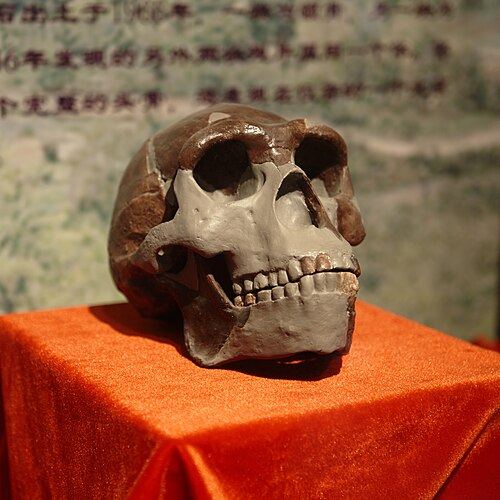
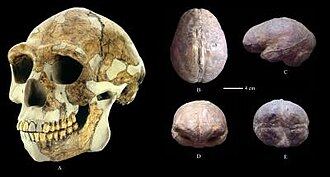
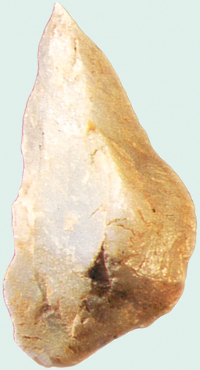
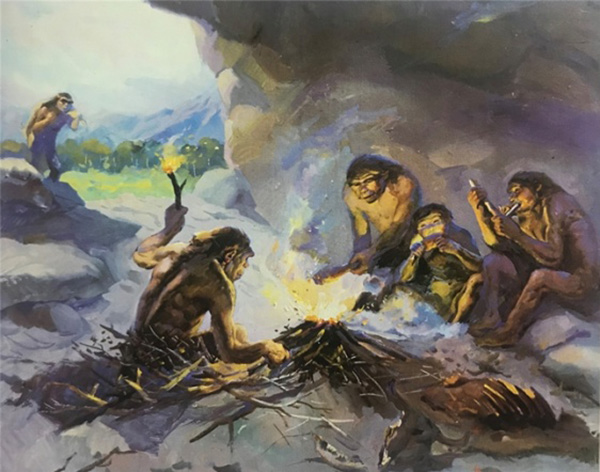
Peking Man, or Peking Homo erectus, is known from a site on Dragon Bone Hill at Zhoukoudian in Fangshan District, southwest of Beijing. Chinese and foreign scholars excavated here from 1921, and the name “Peking Man” was given on the basis of excavated teeth. In December 1929 the young scholar Pei Wenzhong found the first complete Peking Man skullcap, and traces of fire were confirmed the same year, causing a worldwide sensation. Five more fairly complete skullcaps were later unearthed, along with fossils of more than 40 individuals, nearly 100,000 stone artifacts and many animal fossils. Unfortunately, around the outbreak of the Pacific War in 1941, these precious skull fossils went missing in transit and have never been recovered. Peking Man is dated to about 700,000–200,000 years ago. He had a low, flat forehead, heavy brow ridges and a protruding mouth, and an average brain size of about 1,088 ml, smaller than that of modern humans, but he already walked upright. Peking Man made pointed tools, scrapers and other chipped tools from stone and animal bone, lived by gathering and hunting, and lived in groups. Thick ash layers, burnt stones and burnt bones at the site show that they not only used fire but kept it burning for long periods, using it to cook, keep warm, give light and drive off animals. Mastering fire was a milestone in human evolution. The Peking Man site at Zhoukoudian is rich in remains and was added to the World Heritage List in 1987. It provided strong evidence for the Homo erectus stage and is important for the study of human origins, earning Zhoukoudian the title “treasure house of ancient human culture.”


References
Text and images from Wikipedia are used under CC BY-SA and their respective licenses