Paleolithicc. 2 million–10,000 years ago
Yuanmou Man
c. 1.7 million years ago
Fossils of Homo erectus found at Yuanmou in Yunnan date to about 1.7 million years ago and are the earliest confirmed human remains in China.
View on the timeline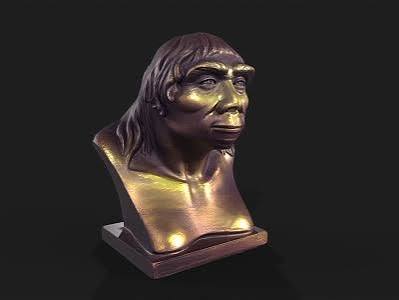
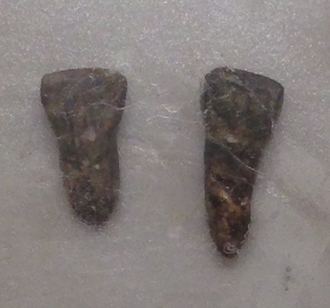
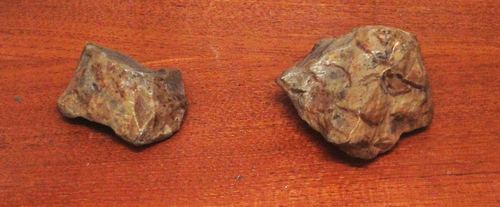
Yuanmou Man, also called Yuanmou Homo erectus, is known from two upper central incisors of a single adult, found in 1965 by geologists near Shangnabang village in Yuanmou County, Yunnan. The teeth are robust and shovel-shaped on the tongue side, typical features of Homo erectus. Later, a few crude stone tools, charcoal fragments and animal bones bearing traces of human work were found in the same stratum. Some scholars take this to mean Yuanmou Man may have used fire, though the point remains disputed. Paleomagnetic dating places Yuanmou Man at about 1.7 million years ago, although some scholars argue the date may be as recent as 600,000–700,000 years ago, and discussion continues. Standard Chinese history textbooks use the figure of c. 1.7 million years and list Yuanmou Man as the earliest confirmed human ancestor in China. Yuanmou Man lived in the Early Paleolithic, when the Yuanmou Basin was warm, with forest and grassland and animals such as stegodons and Yunnan horses. He could chip simple stone tools and lived by gathering and hunting. China has one of the largest numbers of early human sites in the world, and Yuanmou, together with Peking Man and Upper Cave Man, provides important evidence for the origin and evolution of humans in East Asia. A Yuanmou Man museum in Yuanmou County displays the fossils and artifacts. The discovery pushed the history of human activity in China back more than a million years.

References
Text and images from Wikipedia are used under CC BY-SA and their respective licenses