Northern and Southern DynastiesAD 420–589
Northern and Southern Dynasties: Timeline of Events (AD 420–589)
North and south stand divided as peoples intermingle
View on the timelineEvents in this period
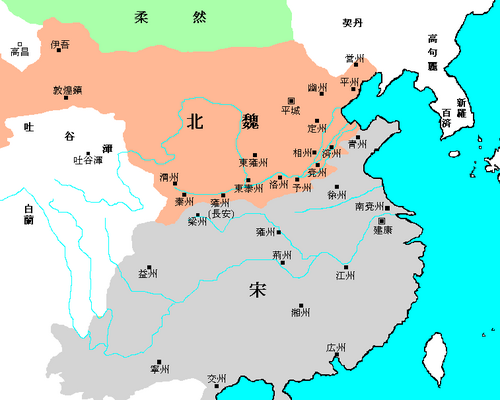 End of the Eastern Jin and the Southern DynastiesAD 420–589
Liu Yu replaced the Jin with the Song in AD 420; the south then saw four dynasties, Song, Qi, Liang and Chen, all based at Jiankang, the “Southern Dynasties,” until the Sui destroyed the Chen in 589.
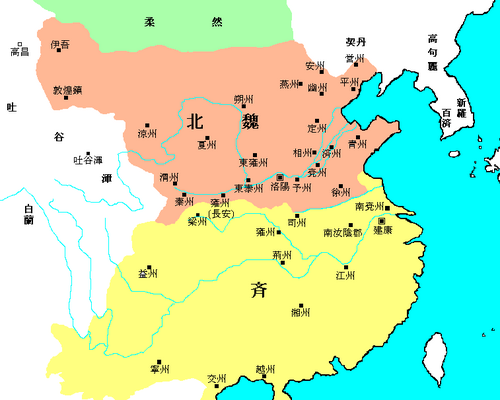 Northern Wei Unifies the NorthAD 439
The Northern Wei, founded by the Tuoba of the Xianbei, grew strong; in AD 439 Emperor Taiwu destroyed Northern Liang and unified the north, ending the division there since the Sixteen Kingdoms.
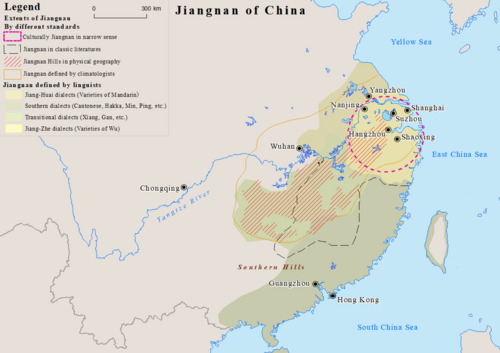 Development of the Jiangnan RegionEastern Jin and Southern Dynasties
Northerners moving south brought labor and techniques; Jiangnan's farming and crafts grew rapidly, laying the basis for the economic center's later shift south.
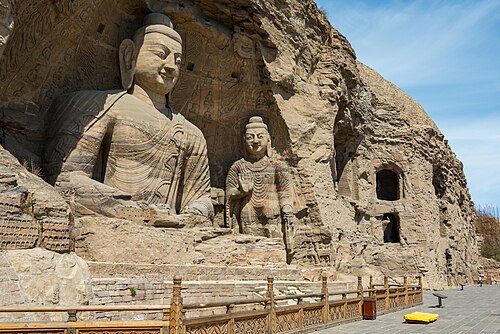 Carving of the Yungang GrottoesNorthern and Southern Dynasties
Under Emperor Wencheng the monk Tanyao led the carving of the Yungang Grottoes near Pingcheng (Datong); the “Tanyao Five Caves” Buddhas make it one of China's three great grottoes.
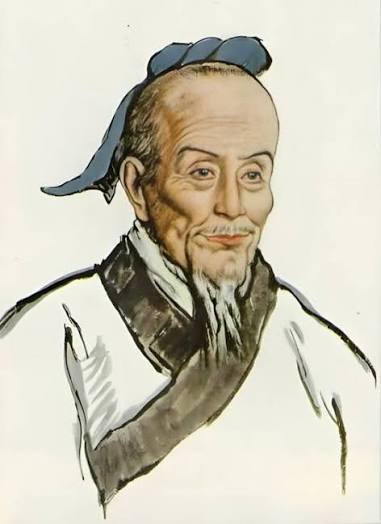 Zu Chongzhi Calculates PiNorthern and Southern Dynasties
The Southern Dynasties scientist Zu Chongzhi fixed pi between 3.1415926 and 3.1415927, leading the world by nearly a thousand years, and also compiled the Daming Calendar.
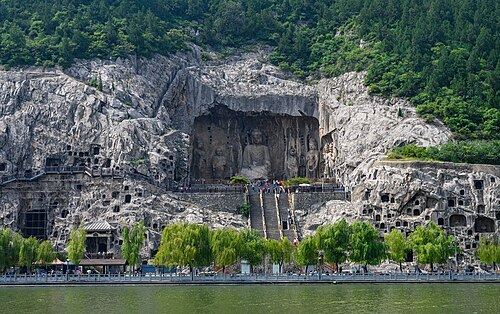 Carving of the Longmen GrottoesAfter the Northern Wei moved its capital to Luoyang
Around Emperor Xiaowen's move of the Northern Wei capital to Luoyang, carving began on the Yi River banks; it lasted over four hundred years and left more than 2,300 niches and 100,000 statues.
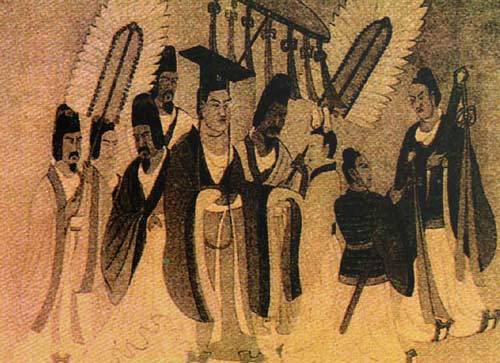 Emperor Xiaowen's ReformsAD 494
Building on Empress Dowager Feng's reforms, Emperor Xiaowen of the Northern Wei moved the capital to Luoyang in AD 494 and enforced sinicizing measures such as speaking Chinese and wearing Han dress.
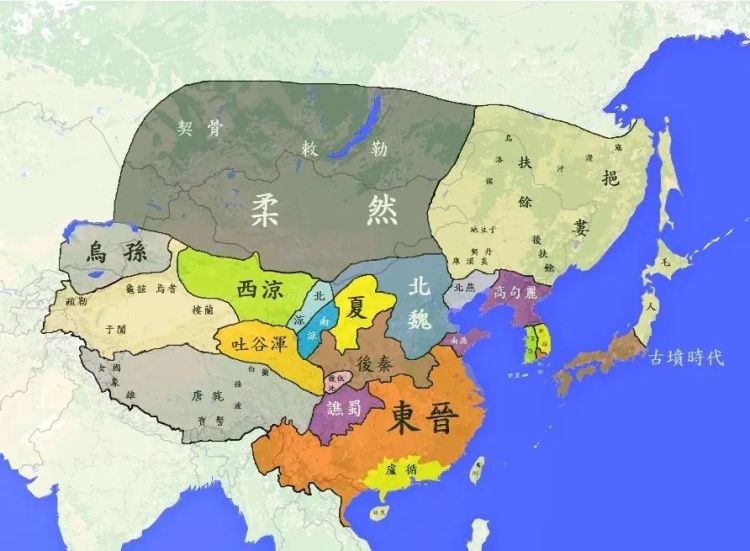 The Great Fusion of Northern PeoplesLate Northern Dynasties
In the late Northern Dynasties, peoples who had moved inward lived and intermarried with the Han and learned from each other in economy, culture and customs, producing a great fusion in the north.
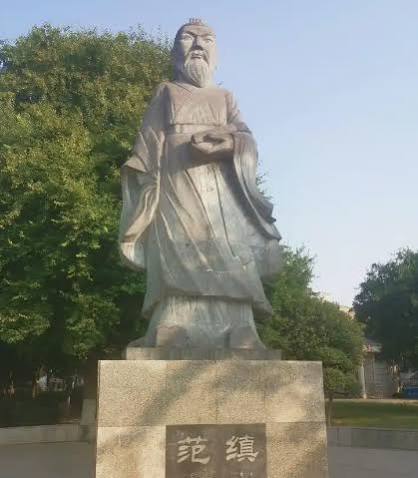 Fan Zhen Writes On the Extinction of the SoulSouthern Dynasties
Fan Zhen's On the Extinction of the Soul argued that “when the body remains, the spirit remains; when the body perishes, the spirit perishes,” a systematic atheism that attacked Buddhist karma.
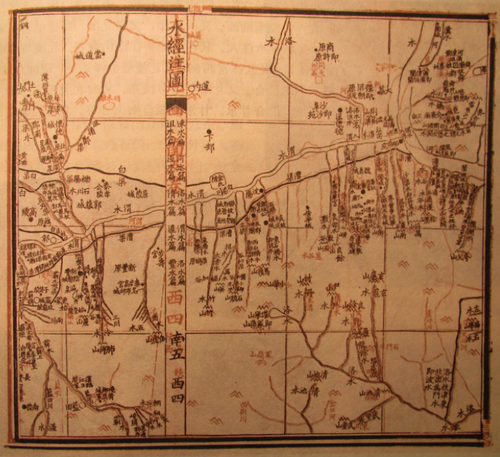 Li Daoyuan's Commentary on the Water ClassicNorthern Wei
The Northern Wei geographer Li Daoyuan, after fieldwork across the land, annotated the Water Classic in the 40-chapter Commentary on the Water Classic, recording 1,252 rivers.
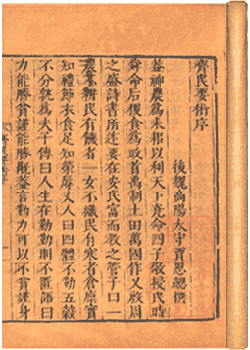 Jia Sixie's Qimin Yaoshu (Essential Techniques)Northern Dynasties
Jia Sixie of the Northern Wei summarized farming, forestry, herding and fishing techniques in Essential Techniques for the Common People, China's earliest complete surviving farming treatise.