Neolithicc. 10,000 years ago–2070 BC
Majiayao culture
2600 BCE
Majiayao communities produced distinctive painted pottery.
View on the timeline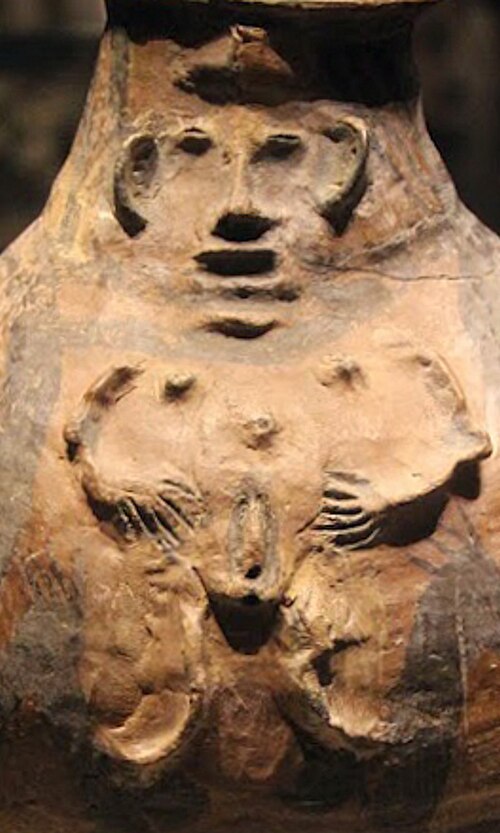
Image: Prof. Gary Lee Todd · CC BY-SA 4.0 · Original
The Majiayao culture is an archaeological label for communities rather than the name of a unified state. Its sites spread across the upper Yellow River and the adjoining valleys of present-day Gansu and Qinghai, where farming settlements also relied on herding, hunting, and exchange. Archaeologists distinguish successive types, including Majiayao, Shilingxia, Banshan, and Machang; their pottery and dates show change over time rather than one unchanging style. The culture is especially known for painted vessels decorated with swirling, crossing, and geometric patterns, as well as occasional human and animal figures. These objects reveal skilled ceramic production and shared visual practices, although the precise meanings of individual motifs remain uncertain. Stone and bone tools document everyday work, while finds of early copper objects at sites such as Linjia have prompted discussion about the region’s place in the emergence of metallurgy. A few early metal finds do not by themselves establish a mature Bronze Age economy. The culture’s connections with Yangshao and later Qijia communities are best understood through layered archaeological evidence, not as a simple succession of political states.
References
Text and images from Wikipedia are used under CC BY-SA and their respective licenses