QingAD 1644–1912
White Lotus Rebellion
1796
The White Lotus uprising challenged Qing rule for years.
View on the timeline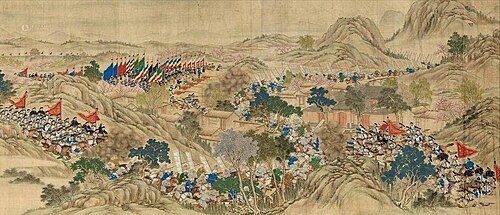
Image: Anonymous (Qing dynasty) · Public domain · Original
The White Lotus Rebellion usually refers to a series of conflicts in Sichuan, Hubei, Shaanxi, and neighboring regions from 1796 to 1804. The insurgents were not one centrally organized army or a single religious community; local groups included members of different devotional networks, poor farmers, migrants, and armed bands. Fiscal burdens, official corruption, rapid population growth, competition for land in frontier districts, and weak local security all contributed to unrest. Religious and secret-society networks helped people organize and communicate, while mobile tactics made it difficult for Qing forces to bring the conflict to a quick end. The court deployed Green Standard troops and local forces, spending heavily on campaigns, blockades, recruitment, and negotiated surrender. The rebellion was eventually suppressed, but it strained the treasury and encouraged greater reliance on local militias and community controls. Historical sources often use “White Lotus” as a broad label for diverse groups whose beliefs and aims differed. Casualty and participation figures are uncertain, so the rebellion should not be described as a uniform movement with one motive.
References
Text and images from Wikipedia are used under CC BY-SA and their respective licenses