QingAD 1644–1912
Imperially Approved Regulations for Tibet and the Golden Urn
1793
In 1793 the Qing issued 29 articles setting the Amban on par with the Dalai and Panchen Lamas and requiring “Golden Urn” lot-drawing for the reincarnations of major lamas.
View on the timeline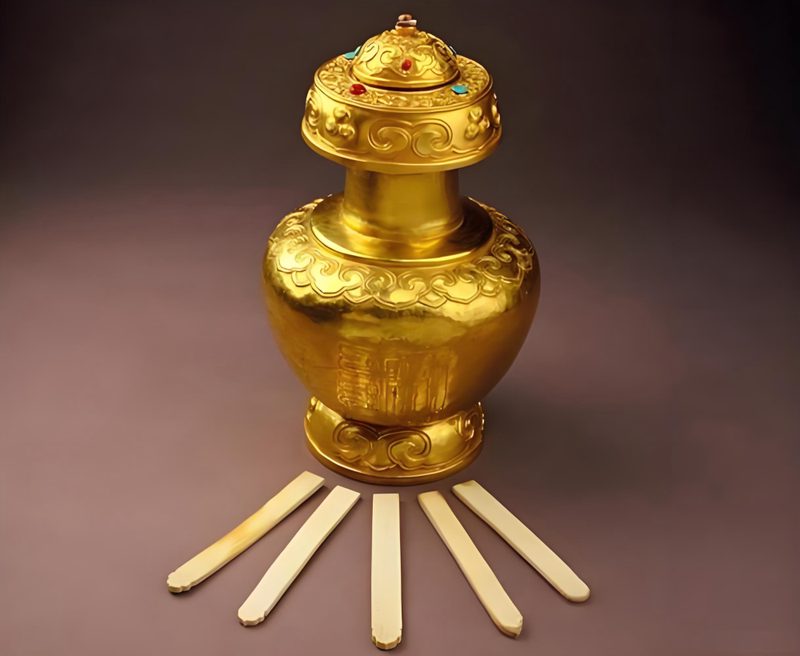
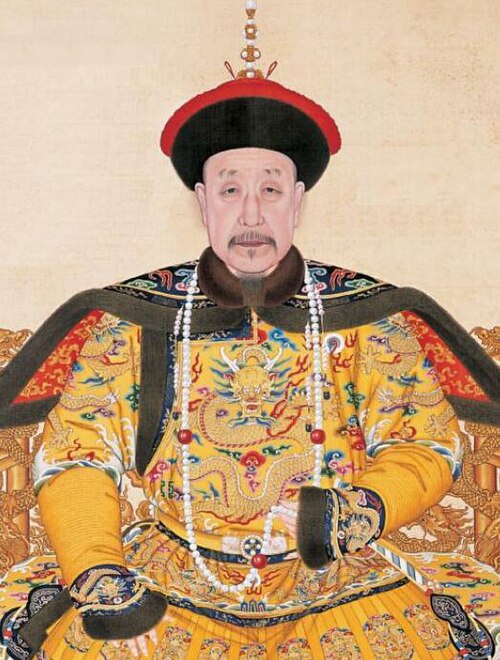
In the late 18th century the Gurkhas (of present-day Nepal) invaded Tibet twice, and in 1791 they reached Shigatse and plundered Tashilhunpo Monastery. The Qianlong Emperor sent Fukang’an to lead Qing troops into Tibet; in 1792 they defeated the Gurkhas and advanced close to their capital, whereupon the Gurkhas sued for peace. Afterward, to reorganize Tibet’s administration, the emperor had Fukang’an and others consult with the Dalai Lama and the Panchen Erdeni, and in 1793 the 29-article Imperially Approved Regulations for Tibet were issued. They provided that the Amban stationed in Tibet would oversee Tibetan affairs and, in political standing, be equal to the Dalai Lama and Panchen Erdeni, handling affairs jointly with them; that military, foreign, financial and judicial matters would be managed by the Amban; that Tibet would have a regular army of 3,000 men; that Tibet would mint silver coins stamped “Qianlong Baozang”; and that the reincarnations of the Dalai Lama, Panchen Erdeni and other major lamas must be determined by “Golden Urn” lot-drawing. The Qing made two golden urns, one kept in the Jokhang Temple in Lhasa for the reincarnations of the Dalai Lama, Panchen and other major lamas, the other in the Yonghe Temple in Beijing for those of Mongol regions. The names of candidate children were written on ivory slips and placed in the urn, with the Amban presiding, and the result was reported to the central government for approval. The regulations established in law the central government’s system of administering Tibet, and the Golden Urn system is still used; the 11th Panchen Erdeni was identified in 1995 through the Golden Urn and approved by the State Council.
References
Text and images from Wikipedia are used under CC BY-SA and their respective licenses