QingAD 1644–1912
Cao Xueqin’s Dream of the Red Chamber
Late Qianlong reign
Cao Xueqin’s novel Dream of the Red Chamber (first titled Story of the Stone) centers on the tragic love of Jia Baoyu and Lin Daiyu and is regarded as the peak of classical Chinese fiction.
View on the timeline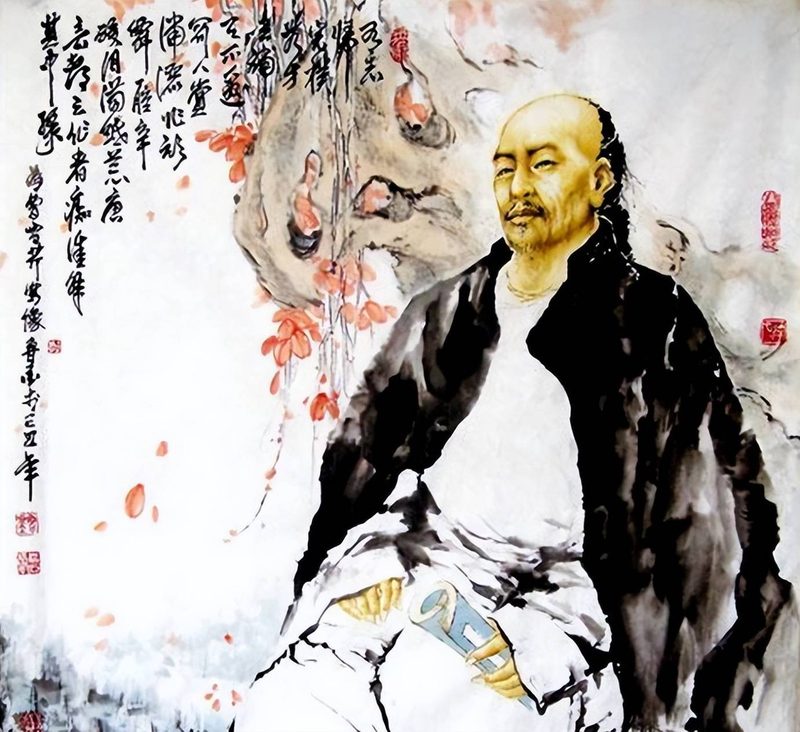
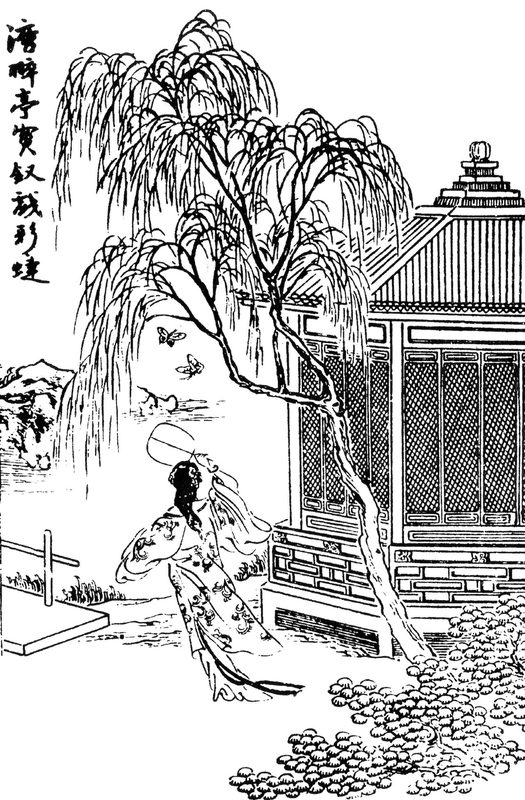
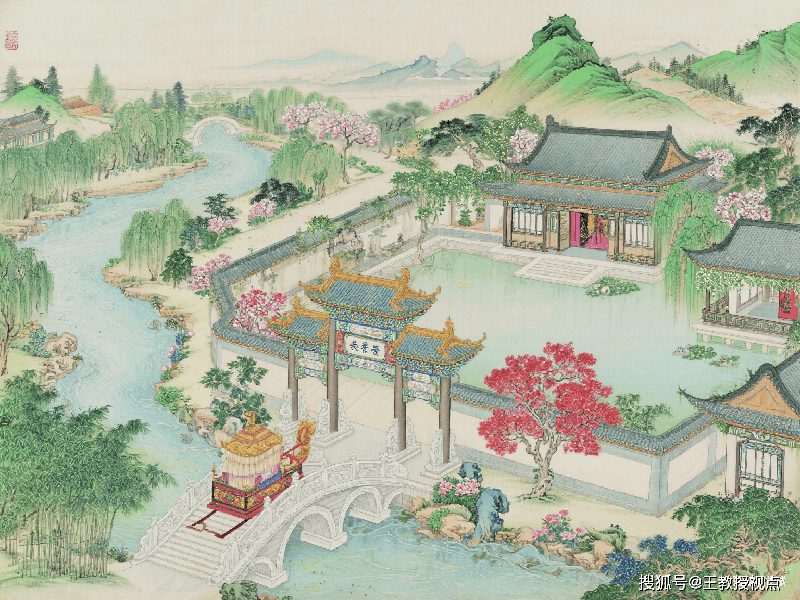
Fiction in the Qing achieved unprecedented success, and the most accomplished and influential work was Cao Xueqin’s Dream of the Red Chamber (Honglou Meng). Cao Xueqin (c. 1715–c. 1763), personal name Zhan, came from a “century-old distinguished family” in which four people over three generations served as Textile Commissioner of Jiangning. In the early Yongzheng reign the family was ruined when its property was confiscated on charges including financial shortfalls. In his later years Cao moved to the western suburbs of Beijing and lived in poverty, “the whole household eating gruel, wine often bought on credit.” With firm perseverance he devoted himself to the novel, “reading and revising for ten years and altering it five times.” It was first called Story of the Stone, and he essentially finished the first eighty chapters in his lifetime. After his death, the last forty chapters are generally believed to have been written by Gao E; in 1791 Cheng Weiyuan printed it in movable type under the title Dream of the Red Chamber, in 120 chapters. Set against the rise and fall of the four great families of Jia, Shi, Wang and Xue, with the tragic love of Jia Baoyu and Lin Daiyu as its main thread, the novel portrays a noble household’s decline, exposes the rot and darkness of feudal society, and expresses dissatisfaction with feudal ethics and the examination system. It creates hundreds of vivid characters, including Jia Baoyu, Lin Daiyu, Xue Baochai and Wang Xifeng, with a grand, tight structure and beautiful language, and weaves in poetry, architecture, gardens, food, clothing and medicine. It has been called “an encyclopedia of Chinese feudal society,” gave rise to the field of “Redology,” and has been translated into many languages.
References
Text and images from Wikipedia are used under CC BY-SA and their respective licenses