People's Republic of China1949–present
Aircraft Carrier Liaoning Enters Service
September 2012
In September 2012 China’s first aircraft carrier, the Liaoning, was handed over to the navy and J-15 fighters landed on it that year, bringing the navy into the carrier age.
View on the timeline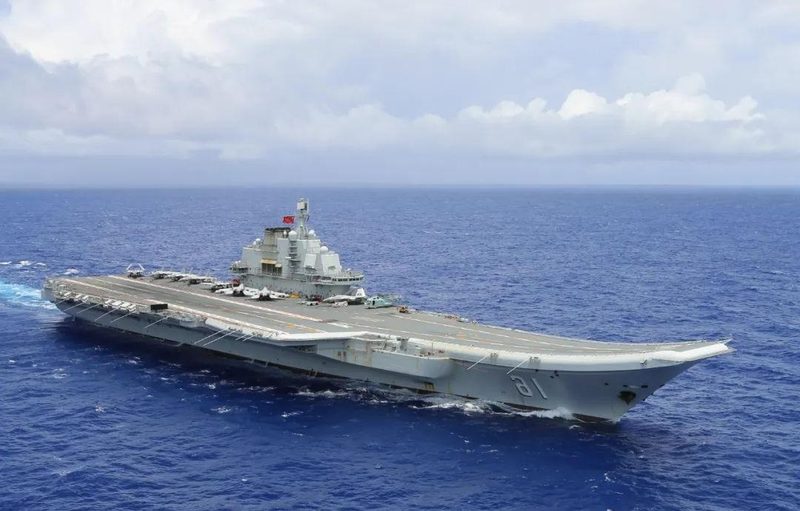
From the 1990s China’s naval weaponry was continually renewed and its level of modernization rose markedly. An aircraft carrier is a large surface warship whose main weapon is its carrier-based aircraft, and is regarded as a symbol of a country’s overall strength and naval power. The Liaoning began as the Soviet-built carrier Varyag, which was unfinished when the Soviet Union collapsed. Ukraine later sold it, a Chinese company bought it in 1998, and it was towed to Dalian in 2002. Chinese researchers and workers completed and refitted it, overcoming many technical problems. In August 2011 the carrier began sea trials. On 25 September 2012 China’s first aircraft carrier was formally handed over to the navy and named the Liaoning, hull number 16. In November that year J-15 carrier-based fighters took off and landed on the Liaoning successfully. Luo Yang, the on-site chief commander of the J-15 program, died of a sudden heart attack after the tests succeeded and has been hailed as a model of “serving the country through aviation.” The Liaoning is used mainly for research trials and training, building experience and training personnel for China’s carrier program. Carrier building then moved quickly: in December 2019 the Shandong, China’s first domestically built carrier, entered service, and in June 2022 the Fujian, its first carrier with electromagnetic catapults, was launched. The entry of carriers into service marked a new stage in naval development and is of great importance for safeguarding national sovereignty, security and development interests and world peace.
References
Text and images from Wikipedia are used under CC BY-SA and their respective licenses