People's Republic of China1949–present
The Great Leap Forward and Economic Readjustment
1958–1961
The Great Leap Forward and people's communes launched in 1958 caused severe economic hardship; from 1961 a policy of readjusting, consolidating, filling out and raising standards followed.
View on the timeline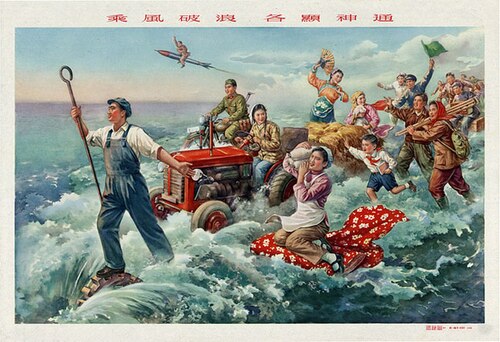
Image: Wang Liuying (王柳影), Xin Liliang (忻礼良), Meng Muyi (孟幕颐), Xu Jiping (徐寄萍), Zhang Biwu (张碧梧), Wu Shaoyun (吴少云), Jin Zhaofang (金肇芳), Yu Weibo (俞微波), Lu Zezhi (陆泽之) · Public domain · Original
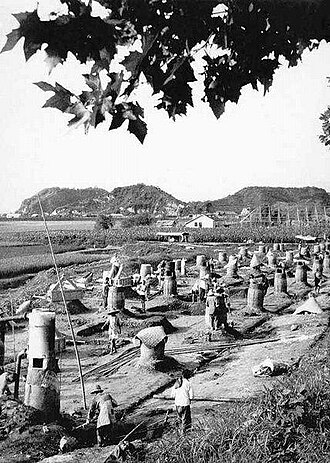
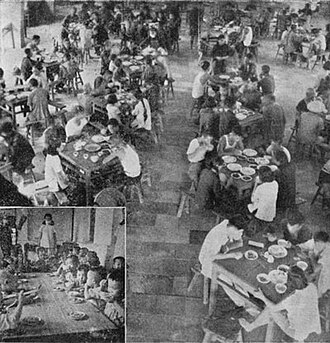
After socialist transformation was largely complete, the Chinese people were eager to change their country's economic and cultural backwardness. With too little experience in socialist construction and a rush for quick results, the role of subjective will and effort was exaggerated. In 1958 the second session of the Eighth Party Congress put forward the general line of "going all out, aiming high, and achieving greater, faster, better and more economical results in building socialism." A high tide of the "Great Leap Forward" then quickly swept every front, with unrealistic targets such as doubling steel output in a year to 10.7 million tons, which led to a nationwide campaign to smelt steel, while in agriculture "high-yield satellites" of grain were announced and exaggeration was rife. That same year the rural people's commune movement merged advanced agricultural cooperatives into people's communes and spread a "communist wind." Leftist errors marked by high targets, blind commanding, exaggeration and the "communist wind" spread widely. The Great Leap Forward and the commune movement disrupted the normal order of the national economy and caused serious imbalances; together with natural disasters and the withdrawal of Soviet experts, the economy fell into serious difficulties from 1959 to 1961, and the people suffered heavy losses. In January 1961 the Ninth Plenary Session of the Eighth Central Committee formally decided on the eight-character policy for the economy: "readjust, consolidate, fill out and raise standards." In January 1962 the Party Central Committee held an enlarged working conference, the "Seven Thousand Cadres Conference," which made a preliminary summing-up of lessons since the Great Leap Forward. After the readjustment, the economy had fully recovered and developed by 1965.
Public domain · Original

Image: 魏德忠 · Public domain · Original

Public domain · Original

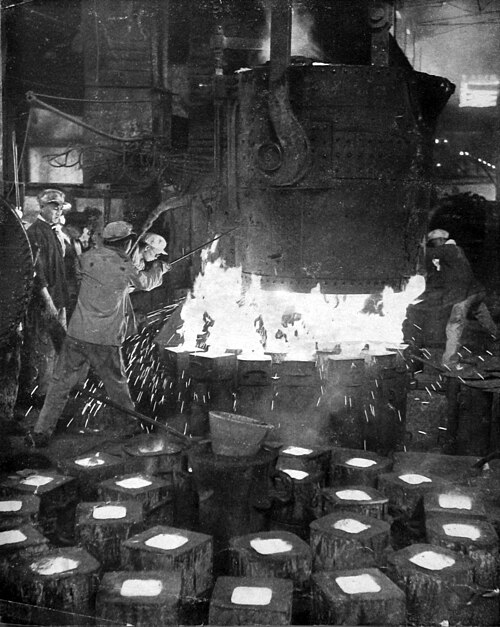
Image: 李九龄 · Public domain · Original

Public domain · Original

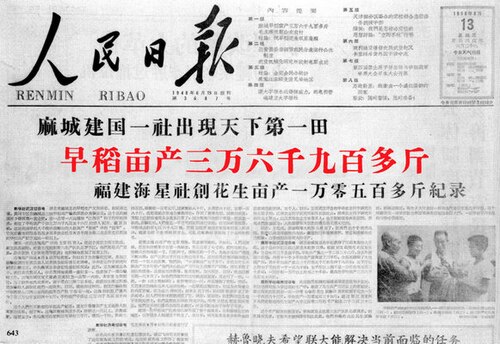
Image: People's daily · Public domain · Original

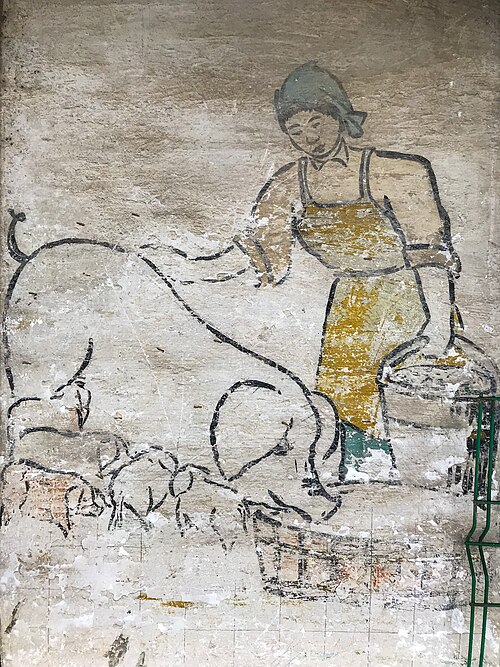
Image: Fayhoo · CC BY-SA 3.0 · Original

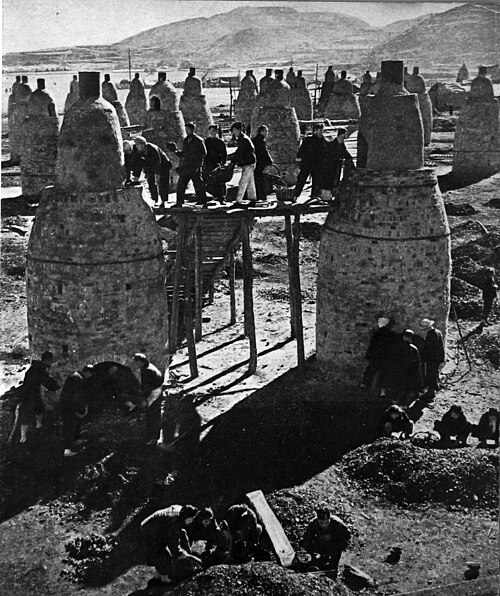
Image: 张青云 · Public domain · Original
