People's Republic of China1949–present
Five Principles of Peaceful Coexistence and Bandung Conference
Late 1953–1955
Zhou Enlai first proposed the Five Principles of Peaceful Coexistence in late 1953, and at the 1955 Bandung Conference helped it succeed by "seeking common ground while reserving differences."
View on the timeline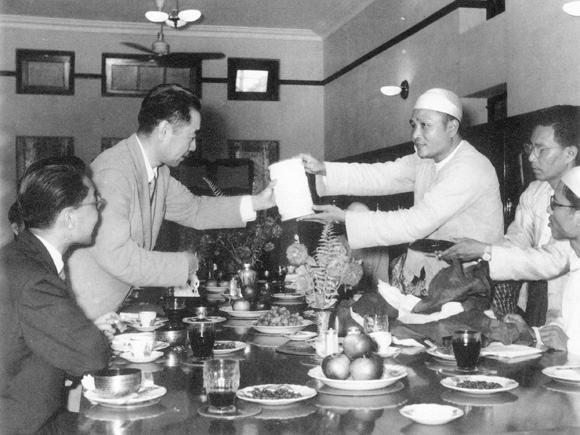
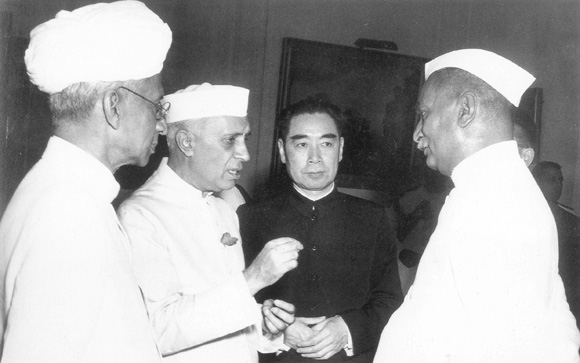
After its founding New China followed an independent foreign policy of peace and worked to develop friendly relations with other countries. In December 1953, receiving an Indian government delegation, Premier Zhou Enlai first put forward five principles, mutual respect for territorial integrity and sovereignty, mutual non-aggression, non-interference in each other's internal affairs, equality and mutual benefit, and peaceful coexistence, as the principles for handling relations between the two countries. In 1954 Zhou Enlai visited India and Burma, and China, India and Burma jointly advocated the Five Principles as the norms for international relations. They have since become a basic norm for relations between states, recognized by most countries of the world. In April 1955 delegates from 29 Asian and African countries and territories met at the Asian-African Conference in Bandung, Indonesia, and Zhou Enlai led the Chinese delegation. During the conference some attacked communism and sowed discord, creating disagreements and at one point even a danger of breakdown. In response Zhou made a supplementary speech putting forward the policy of "seeking common ground while reserving differences," saying: "The Chinese delegation has come to seek unity and not to quarrel... The Chinese delegation has come to seek common ground, not to create differences." His speech won general praise from the delegates and turned the conference from crisis to success. The conference adopted a final communique setting out ten principles for handling international relations and forming the "Bandung Spirit" of unity, anti-imperialism, anti-colonialism and the pursuit of national independence. After Bandung, China's relations with Asian and African countries developed further, and New China's international influence grew.
References
Text and images from Wikipedia are used under CC BY-SA and their respective licenses