Republic of ChinaAD 1912–1949
Chongqing Negotiations and the Double Tenth Agreement
August–October 1945
In August 1945 Mao Zedong went to Chongqing at Chiang Kai-shek's invitation; on 10 October they signed the Double Tenth Agreement, with the Kuomintang accepting peaceful reconstruction.
View on the timeline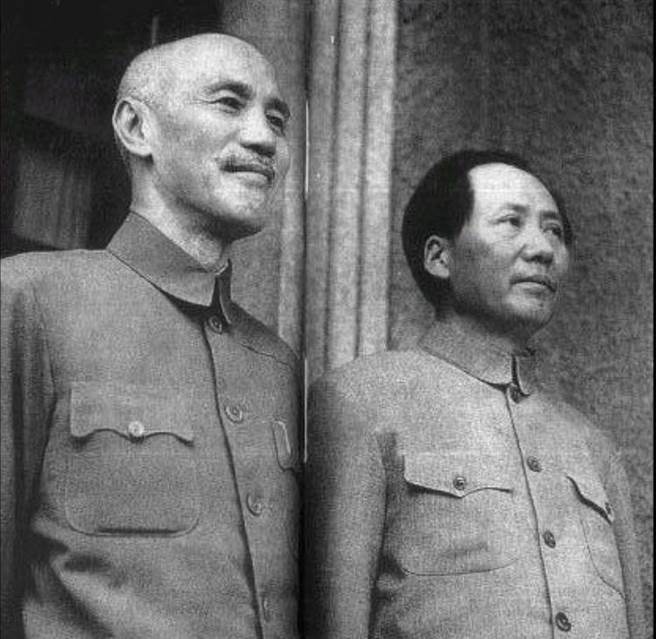
After victory in the War of Resistance, China faced the question of what kind of state to build. Chiang Kai-shek sought to establish one-party Kuomintang rule, but his civil-war preparations were incomplete, the main Kuomintang forces were still far away in the southwest and northwest, and opinion at home and abroad demanded peace, so he telegraphed Mao Zedong three times to come to Chongqing "to discuss national affairs together." One of his aims was to buy time to start a civil war. To seek peace, the Communist Party decided to send Mao Zedong, Zhou Enlai and Wang Ruofei to the talks. On 28 August 1945 Mao flew from Yan'an to Chongqing accompanied by US Ambassador Patrick Hurley and Kuomintang representative Zhang Zhizhong. His going in person showed the Party's sincerity in seeking peace. In Chongqing Mao wrote out his poem Snow, to the tune of Qinyuanchun, as a gift to Liu Yazi, causing a sensation in the city. After forty-three days of arduous negotiations, on 10 October the two sides signed the Summary of Talks Between the Government and the Communist Party Representatives, known as the Double Tenth Agreement. The Kuomintang accepted the basic policy of peaceful national reconstruction, agreed to convene a Political Consultative Conference and recognized the equal legal status of all parties. But no agreement was reached on the governments of the liberated areas or on the people's army. To show its goodwill the Communist Party made concessions, voluntarily withdrawing from eight liberated areas including those in Guangdong and Zhejiang. In January 1946 the Political Consultative Conference met in Chongqing and adopted agreements including a program for peaceful national reconstruction, but the Kuomintang soon tore up both the Double Tenth Agreement and the conference resolutions. The sites of the negotiations survive at Hongyan Village and Guiyuan in Chongqing.
References
Text and images from Wikipedia are used under CC BY-SA and their respective licenses