Republic of ChinaAD 1912–1949
Beijing–Hankou Railway Strike, February 7 Massacre
February 1923
In February 1923 Beijing–Hankou Railway workers struck for a general union; Wu Peifu suppressed them by force in the “February 7 Massacre”, in which Lin Xiangqian and Shi Yang died heroically.
View on the timeline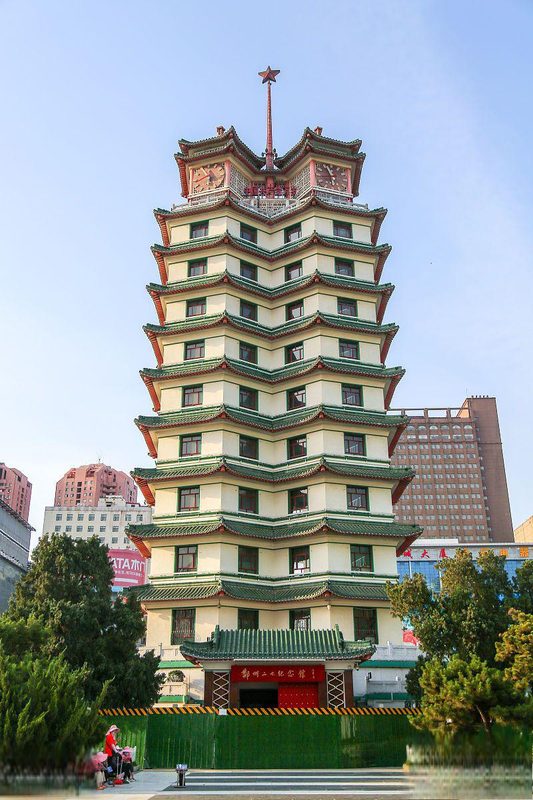
After its founding the Party set up the China Labor Union Secretariat to lead the national labor movement in a concentrated way. Under Party organization and encouragement, a first upsurge of the labor movement swept the country from early 1922 to spring 1923; the Hong Kong seamen's strike and the Anyuan railway and mine workers' strike, led by Li Lisan, Liu Shaoqi and others, both won. On 1 February 1923 the Beijing–Hankou Railway General Union held its founding meeting in Zhengzhou, but was obstructed by force by the Zhili warlord Wu Peifu; the union was forced to move to Jiang'an in Hankou and decided on a general strike along the whole line under the slogan “Fight for freedom, fight for human rights”. On 4 February over thirty thousand railway workers went on strike. With the support of the imperialist powers, on 7 February Wu sent troops and police to crush the strikers bloodily at Changxindian, Zhengzhou, Jiang'an and elsewhere, killing 52, wounding over 300 and arresting over 40, in the “February 7 Massacre” that shocked China and the world. Lin Xiangqian, a Communist and chairman of the General Union's Jiang'an branch, was arrested; when his captors demanded that he order a return to work he refused and died heroically. Shi Yang, a Communist and lawyer who defended the workers, was also killed. After the massacre, the national labor movement entered a low tide. The Beijing–Hankou strike was the peak of the first upsurge of the labor movement. It showed the strength of the Chinese working class, and also led the Party to realize that the working class must unite all forces that could be united and build a broad revolutionary united front.
References
Text and images from Wikipedia are used under CC BY-SA and their respective licenses