QingAD 1644–1912
Founding of the Commercial Press
1897
In 1897 Xia Ruifang, Bao Xianchang and others founded the Commercial Press in Shanghai, publishing many textbooks, dictionaries and scholarly works and becoming modern China’s largest publisher.
View on the timeline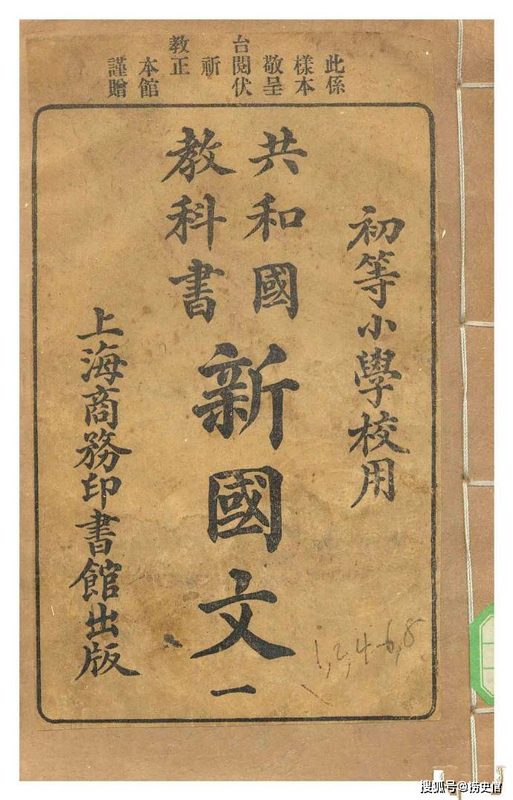
In 1897 Xia Ruifang, Bao Xian’en, Bao Xianchang, Gao Fengchi and others raised funds to found the Commercial Press in Shanghai; it began as a small print shop, hence the name “Commercial.” In 1902 the noted scholar Zhang Yuanji joined and ran its editorial office, aiming to “promote education” and turning the press from printing into a cultural institution centered on publishing. From 1904 it issued series of modern primary and middle school textbooks such as the Newest Textbooks, widely used across the country. It also published Western scholarly classics and literature translated by Yan Fu and Lin Shu, compiled China’s first large comprehensive dictionary Ciyuan (1915), launched periodicals including Eastern Miscellany, Short Story Monthly and Education Magazine, and published large series of ancient texts such as Sibu Congkan. By the early 1930s it had become one of Asia’s largest publishers. In the January 28 Incident of 1932 its main plant and the Oriental Library were bombed by Japanese forces, and over 400,000 volumes burned. The Press recovered quickly in hardship under the slogan “sacrifice for the nation’s crisis, strive for culture.” It was the first and largest cultural publisher founded by Chinese in modern times and promoted culture and education. Zhonghua Book Company, Kaiming Bookstore and Life Bookstore also made important contributions to modern publishing. In 1954 the Commercial Press moved to Beijing, and its Xinhua Dictionary and Contemporary Chinese Dictionary became household names.
References
Text and images from Wikipedia are used under CC BY-SA and their respective licenses