QingAD 1644–1912
Zuo Zongtang Recovers Xinjiang
1875–1884
After Yakub Beg seized Xinjiang, Zuo Zongtang took charge of its military affairs in 1875, recovered all of Xinjiang except Ili by 1878, and Xinjiang became a province in 1884.
View on the timeline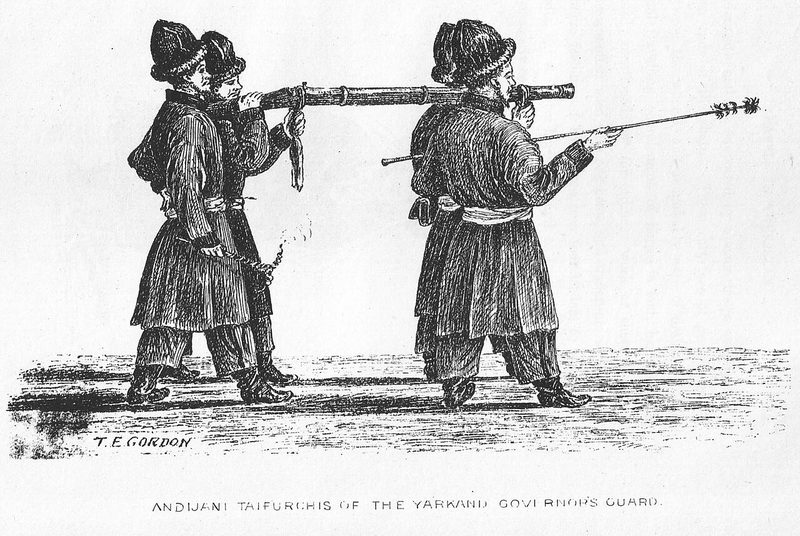
In the 1860s uprisings against the Qing broke out across Xinjiang. In 1865 Yakub Beg, an officer of the Central Asian Khanate of Kokand, invaded, took southern Xinjiang and parts of the north and set up a reactionary regime. In 1871 Russia sent troops to occupy the Ili region on the pretext of “recovering it on China’s behalf.” Meanwhile Japan invaded Taiwan and the southeast coast was under threat, and a debate arose in the Qing court between “coastal defense” and “frontier defense”: Li Hongzhang urged giving up Xinjiang to concentrate on the coast, while Zuo Zongtang, Governor-General of Shaanxi and Gansu, insisted on recovering it, arguing that “to value Xinjiang is to protect Mongolia, and to protect Mongolia is to defend the capital.” The Qing adopted Zuo’s view and in 1875 appointed him Imperial Commissioner overseeing military affairs in Xinjiang. Zuo set the strategy of “north first, then south” and “advance slowly, fight swiftly.” In 1876 Qing forces first recovered northern Xinjiang, and in 1877 they took Dabancheng, Turpan and other gateways to the south; Yakub Beg, with nowhere to turn, died at Korla. By early 1878 the Qing had recovered all of Xinjiang except Ili. To win back Ili, in 1880 the nearly seventy-year-old Zuo went to Hami with a coffin carried behind him, to show his resolve to fight Russia. The Qing sent Zeng Jize to negotiate with Russia, and in 1881 the Treaty of Ili was signed, recovering the Ili region though some territory was still lost. In 1884 Xinjiang formally became a province, with Liu Jintang as first governor and the capital at Dihua (present-day Urumqi). Zuo’s recovery preserved national unity and territorial integrity, and the willows his troops planted along the way are called “Zuo’s willows.”
References
Text and images from Wikipedia are used under CC BY-SA and their respective licenses