QingAD 1644–1912
Founding of Shen Bao
1872
Founded in Shanghai in 1872 by British merchant Ernest Major and later run by Chinese owners until 1949, Shen Bao was one of modern China’s longest-running and most influential newspapers.
View on the timeline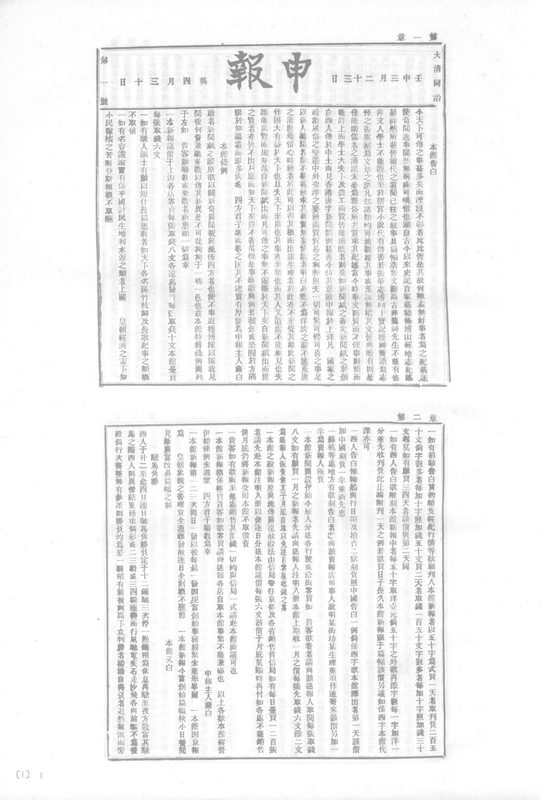
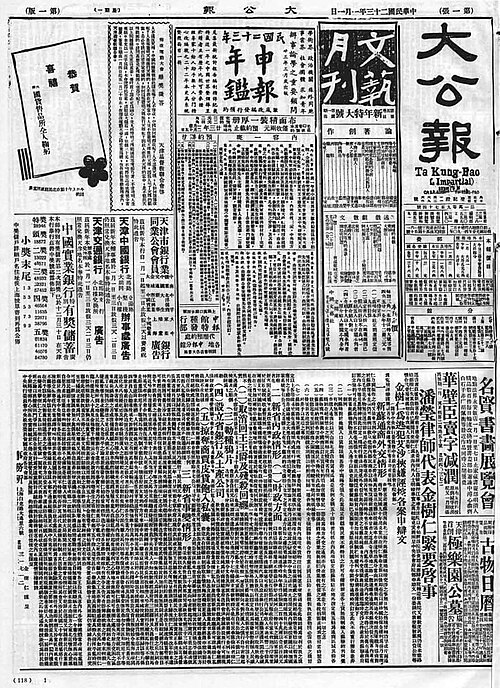
After the Opium War, foreigners founded many newspapers and periodicals in Hong Kong, Shanghai and elsewhere, at first mainly for foreign readers in China, though Chinese-language papers soon appeared. On 30 April 1872 the British merchant Ernest Major and partners founded Shen Bao in Shanghai, originally called Shenjiang Xinbao (“Shen” is another name for Shanghai). It hired Chinese literati as chief writers and carried news, commentary, market prices, advertisements and literary works, suiting Chinese readers’ habits at a low price, and quickly found a market. It sent reporters out early and reported social news such as the “Yang Naiwu and Xiao Baicai” case at length, drawing wide attention. In 1882 it first used the telegraph to transmit news, greatly improving timeliness. In 1909 it was bought by the Chinese comprador Xi Zipei, and in 1912 Shi Liangcai and others took it over, after which it grew into one of the country’s most influential papers. In the 1930s its supplement Free Talk published many articles by writers such as Lu Xun and Mao Dun. After the Mukden Incident it actively promoted resistance to Japan and criticized the Nationalist government’s policy of “internal pacification before external resistance.” In 1934 Shi Liangcai was assassinated by Nationalist agents. After Shanghai’s liberation in May 1949 Shen Bao ceased publication, having published over 25,000 issues. It recorded 77 years of modern Chinese history and has been called an “encyclopedia” for studying modern China. The appearance of modern newspapers accelerated the spread of information and helped change social attitudes and advance ideas.
References
Text and images from Wikipedia are used under CC BY-SA and their respective licenses