QingAD 1644–1912
The Sanyuanli Resistance against the British
30 May 1841
In 1841 British troops plundered the Sanyuanli area near Guangzhou; local villagers rose up and surrounded them at Niulangang, a large-scale spontaneous anti-aggression struggle in modern China.
View on the timeline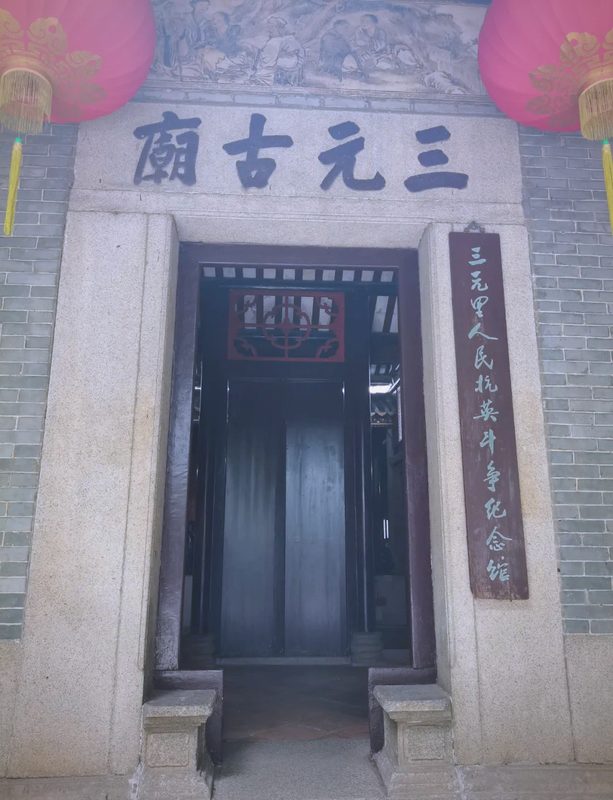
During the Opium War, in May 1841 British forces attacked Guangzhou. Qing commander Yishan and others were defeated and sued for peace, concluding the Convention of Canton and handing over a “ransom of the city” of six million silver dollars. The British were stationed around the Sifang Fort north of the city and often raided nearby villages such as Sanyuanli, looting property, insulting women and digging up graves, which aroused fierce local anger. Led by vegetable farmer Wei Shaoguang and others, the people of Sanyuanli made the Sanyuan Ancient Temple their base and the three-star banner there their signal flag, uniting people from 103 neighboring villages in the “Pingying Tuan” (Anti-British Corps). On the morning of 30 May, thousands of villagers armed with swords, spears and hoes surrounded Sifang Fort. The British sent troops in pursuit, and as planned the villagers fought and retreated, luring them into Niulangang, where seven or eight thousand hidden villagers rushed out and surrounded them. Heavy rain then soaked the British powder, so their muskets were useless; they had to fix bayonets and form squares in the muddy paddy fields, where they were cut down by swords and spears. The next day tens of thousands of villagers kept Sifang Fort surrounded, and the British called for help. Guangzhou Prefect Yu Baochun was ordered to intervene and persuaded the crowds to disperse, and only then could the British withdraw to their ships. The struggle was the first large-scale spontaneous armed anti-aggression struggle of the Chinese people in modern times, showing their fearless patriotic spirit, while exposing the weakness and compromise of Qing officials. A monument and the Sanyuan Ancient Temple Memorial Hall now stand in Sanyuanli, Guangzhou.
References
Text and images from Wikipedia are used under CC BY-SA and their respective licenses