QingAD 1644–1912
The Opium War and the Treaty of Nanjing
1840–1842
Britain launched the Opium War in 1840; the Qing was defeated and in 1842 forced to sign the Treaty of Nanjing, the first unequal treaty of modern times, marking the start of modern Chinese history.
View on the timeline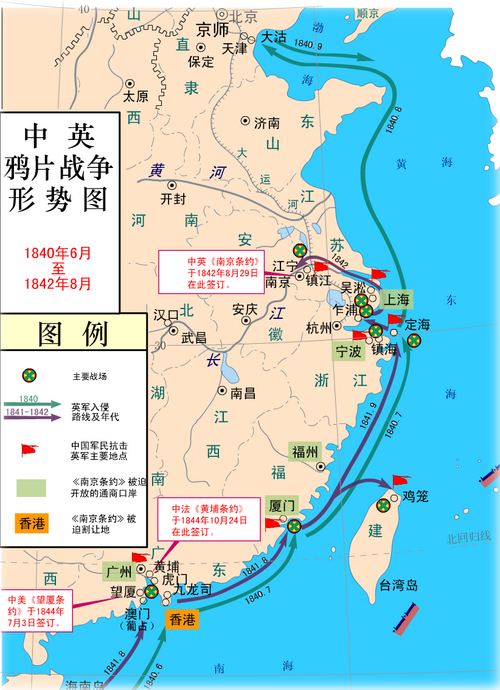
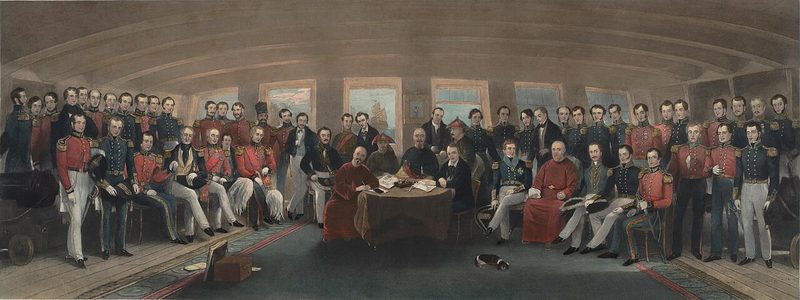
When news of Lin Zexu’s destruction of opium reached London, the British government decided to wage war on China. In June 1840 a British expeditionary force reached the Guangdong coast and the Opium War began. Finding Guangdong well defended, the British moved north, took Dinghai in Zhejiang and reached the mouth of the Baihe River near Tianjin, threatening the Qing court. The panicking Daoguang Emperor dismissed Lin Zexu for “mismanagement” and sent Qishan to negotiate in Guangdong. During the talks, in January 1841 the British seized the Shajiao and Dajiao forts at Humen and occupied Hong Kong Island. The emperor was forced to declare war; in February the British took the Humen forts, and naval commander Guan Tianpei fought to the death. The war then widened: Dinghai fell again, with three brigade generals including Ge Yunfei killed; Zhenhai fell, and Governor-General Yuqian drowned himself. In 1842 the British entered the Yangtze, took the Wusong forts, where Chen Huacheng was killed, and then Zhenjiang. In August British warships reached Nanjing, and the Qing sued for peace and signed the Treaty of Nanjing. It ceded Hong Kong Island to Britain; required an indemnity of 21 million silver dollars; opened Guangzhou, Xiamen, Fuzhou, Ningbo and Shanghai as treaty ports; and required China to agree tariffs on British goods with Britain. The first unequal treaty in modern Chinese history, it gravely damaged China’s territorial sovereignty and tariff autonomy and began China’s slide into a semi-colonial, semi-feudal society. The Opium War marks the start of modern Chinese history, when the Chinese people began their struggle against foreign aggression and for national independence.
References
Text and images from Wikipedia are used under CC BY-SA and their respective licenses