QingAD 1644–1912
Anhui Troupes in Beijing and the Birth of Peking Opera
From 1790
In 1790 the Sanqing and other Anhui troupes came to Beijing for the Qianlong Emperor’s birthday; absorbing Hanju, Kunqu and other forms, they gradually formed Peking Opera in the Daoguang era.
View on the timeline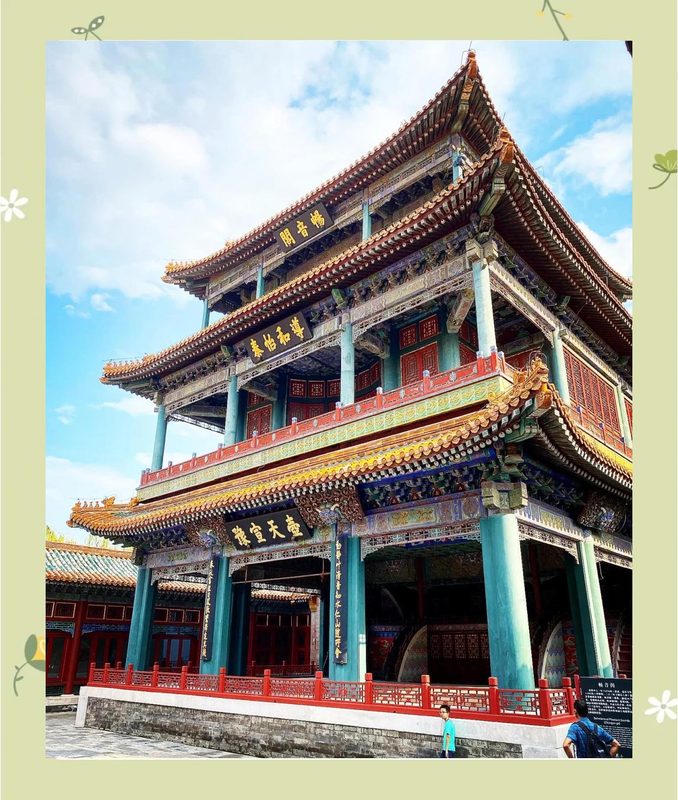
In the Qianlong era Beijing became a gathering place for opera troupes, with all kinds of regional opera performed there. In 1790, for the Qianlong Emperor’s eightieth birthday, the Sanqing Troupe led by Gao Langting came from Yangzhou to perform; the Anhui troupes’ easy-to-follow singing and beautiful melodies were warmly received. The Sixi, Hechun and Chuntai troupes followed, and together they were called the “Four Great Anhui Troupes.” Built mainly on the erhuang tune, they broadly absorbed strengths from Kunqu, Qinqiang, Jingqiang and other forms. In the Daoguang era, Hubei performers of Hanju came to Beijing and performed with the Anhui troupes; the erhuang tune merged with the xipi tune of Hanju into a new genre centered on “pihuang” singing, which took on features of Beijing speech and gradually became Peking Opera. Its accompaniment centers on the jinghu; roles are divided into sheng, dan, jing and chou; performance stresses singing, speech, acting and acrobatics; and the face paint, costumes and movements follow fixed conventions, with strong suggestiveness and symbolism. After its formation Peking Opera spread across the country, producing famous performers such as Cheng Changgeng and Tan Xinpei, and it flourished at court in the Tongzhi and Guangxu reigns. In the Republican period Mei Lanfang, Cheng Yanqiu, Shang Xiaoyun and Xun Huisheng were hailed as the “Four Great Dan,” and Mei Lanfang toured Japan, the United States and the Soviet Union, introducing the art to the world. Drawing on many sources, Peking Opera gathers the essence of Chinese theatre and is regarded as a “national treasure.” In 2010 it was inscribed on UNESCO’s Representative List of the Intangible Cultural Heritage of Humanity.
References
Text and images from Wikipedia are used under CC BY-SA and their respective licenses