MingAD 1368–1644
The Jingnan Campaign
Reign of the Jianwen Emperor
The Jianwen Emperor's curtailing of the princes led Zhu Di, Prince of Yan, to revolt; after four years he took Nanjing and the throne as the Yongle Emperor, later moving the capital to Beijing.
View on the timeline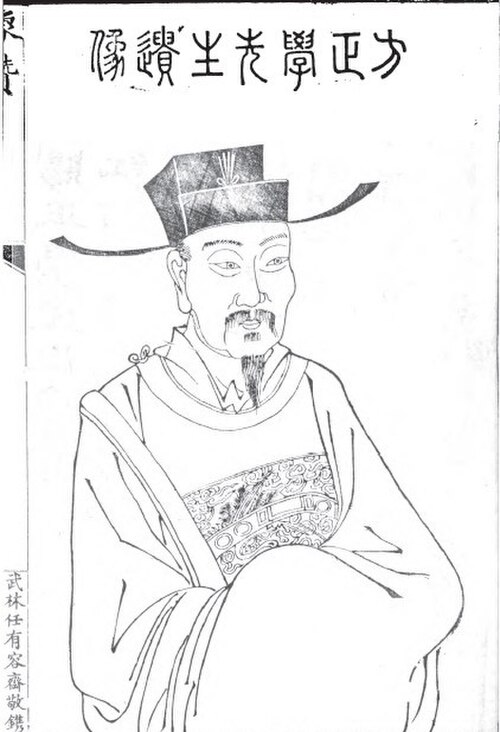
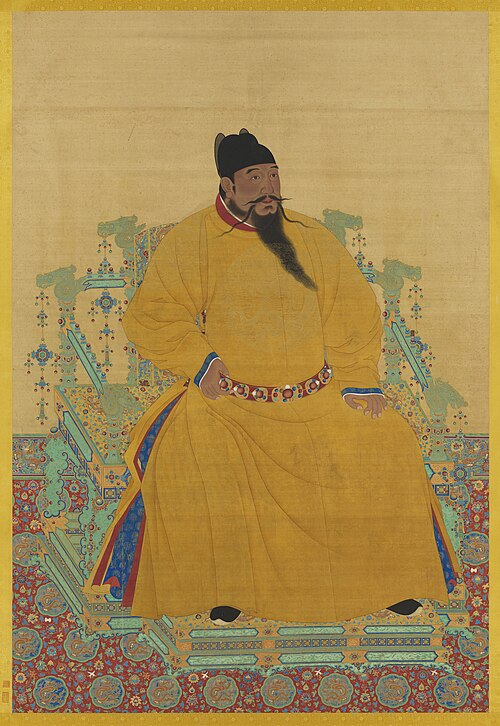
To secure the Zhu family's rule, Ming Taizu Zhu Yuanzhang enfeoffed his sons as princes across the country to guard key places. Those guarding the northern frontier had strong forces, the strongest being Zhu Di, Prince of Yan, stationed at Beiping. In 1398 Taizu died; as the crown prince Zhu Biao had died early, the imperial grandson Zhu Yunwen took the throne with the era name Jianwen, and is known as the Jianwen Emperor. Seeing the princes grow ever stronger, he took the advice of the ministers Qi Tai and Huang Zicheng and ordered the princes' power curtailed, stripping the titles of the princes of Zhou, Qi, Dai, Xiang and Min in turn; the Prince of Xiang was driven to burn himself to death. Feeling threatened, Zhu Di in 1399 rose against the Jianwen Emperor under the slogan of "clearing the emperor's side and quelling the national crisis", the Jingnan Campaign. The Jianwen Emperor lacked battlefield experience, and the court's veteran generals had mostly been killed in the great purges of the early Ming, while the Yan army was battle-hardened and strong. In 1402 Zhu Di avoided the court's main forces, marched south, crossed the Yangtze and entered the capital Nanjing; fire broke out in the palace and the Jianwen Emperor's fate is unknown, one account saying he burned himself to death and another that he became a monk and fled. Zhu Di seized the throne with the era name Yongle and is known as the Yongle Emperor (Ming Chengzu). The great scholar Fang Xiaoru refused to draft the enthronement edict and was executed, and many of his kin and students were implicated. To strengthen northern defense, Zhu Di formally moved the capital to Beijing in 1421, keeping Nanjing as a secondary capital, creating a pattern of "the emperor guarding the gate of the state".
References
Text and images from Wikipedia are used under CC BY-SA and their respective licenses