Northern SongAD 960–1127
Entertainment Quarters and Urban Culture
Northern and Southern Song
Song cities developed entertainment districts called “wazi”, with “goulan” stages for variety plays, storytelling and acrobatics, and an urban culture of unprecedented richness.
View on the timeline
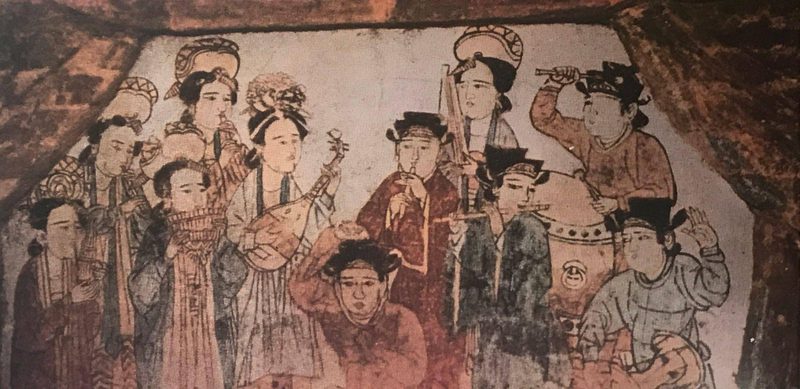
Song urban economies were highly developed: great cities such as Kaifeng and Lin'an held up to a million people, commerce flourished, and a growing urban population formed a large citizen class. As the boundaries between residential wards and markets broke down, demand for entertainment grew, and cities saw venues devoted to it, called “wazi”, “washe” or “waxi”. The performance spaces inside, fenced with railings or ropes, were called “goulan”. The large wazi of Kaifeng had over fifty goulan, the largest holding thousands. In the wazi, performers staged variety plays, storytelling (“shuohua”), puppet shows, shadow plays, acrobatics, wrestling, dance, singing and more, every day regardless of heat, cold or rain, with audiences streaming in. Storytelling meant telling tales of history, heroes and legends and folk life; the storytellers' scripts, called “huaben”, later became the basis of the long chapter novels of Ming and Qing, and Romance of the Three Kingdoms and Water Margin grew from huaben. Song variety plays laid the ground for the rise of Yuan drama. Song cities also had night markets, some open until dawn, and at the Lantern Festival were bright with lanterns and bustling. Books such as Meng Yuanlao's Dreams of Splendor of the Eastern Capital and Wu Zimu's Dream of the Millet records vividly record urban life and entertainment in Kaifeng and Lin'an. The rise of the wazi and goulan reflected the prosperity of Song urban economies and the rise of urban culture, enriched people's spiritual life, and advanced popular literature and drama in China.
References
Text and images from Wikipedia are used under CC BY-SA and their respective licenses