Northern SongAD 960–1127
Shen Kuo and the Dream Pool Essays
Northern Song
The Northern Song scientist Shen Kuo wrote the Dream Pool Essays late in life, recording movable-type printing, magnetic declination and petroleum, a “milestone in the history of Chinese science”.
View on the timeline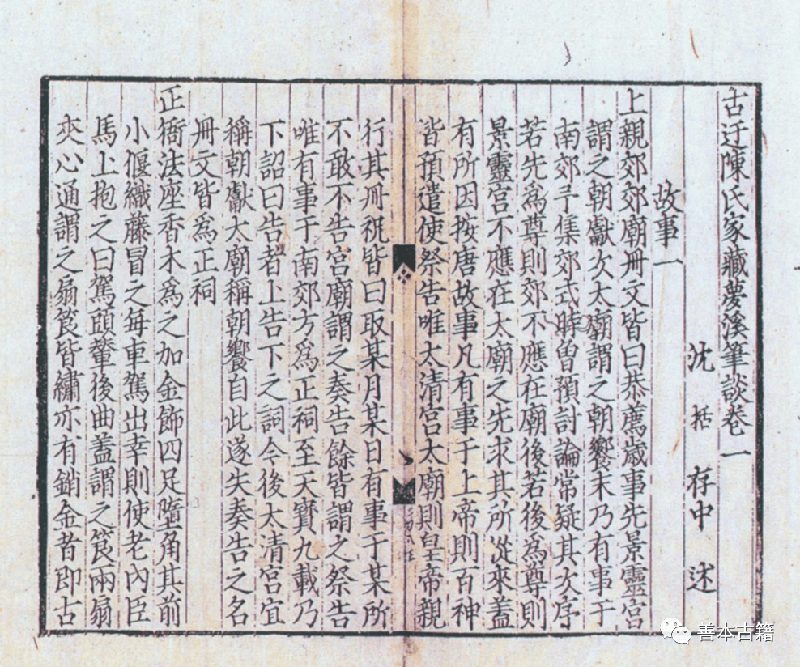
Shen Kuo (1031–1095), courtesy name Cunzhong, from Qiantang (present-day Hangzhou, Zhejiang), was an outstanding Northern Song scientist and statesman. Learned and versatile, he was deeply accomplished in astronomy, the calendar, mathematics, geography, geology, physics, chemistry, medicine and water management. He took an active part in Wang Anshi's reforms. As head of the Astronomical Bureau he improved observation instruments and revised the calendar, proposing a “twelve-qi calendar” that set months by solar terms, taking the start of spring as New Year's Day with 31-day long months and 30-day short months, which would help schedule farming. In his later years Shen Kuo settled at Dream Brook Garden in Runzhou (present-day Zhenjiang, Jiangsu) and wrote his lifetime's observations and findings into the Dream Pool Essays (Mengxi Bitan). The book has 26 chapters, plus supplementary and continued essays, over 600 entries in all, covering astronomy, geography, mathematics, physics, chemistry, biology, medicine, engineering, history, literature and art. It records Bi Sheng's invention of movable-type printing, the most important source for that invention; describes four ways of mounting a magnetic needle and was the first to note that the needle “usually inclines slightly east, not due south”, discovering magnetic declination some four hundred years before Europe; it gave the name “shiyou” (petroleum) to the oil of northern Shaanxi and predicted that “this thing will later be widely used in the world”, a name still used today; and, from conch and clam fossils in the rocks of the Taihang Mountains, it inferred that the area was once seashore.
References
Text and images from Wikipedia are used under CC BY-SA and their respective licenses