TangAD 618–907
Taizong Defeats the Turks, Named “Heavenly Khan”
Zhenguan era
Emperor Taizong sent Li Jing and others to defeat the Eastern Turks and capture Illig Khan. Northern and northwestern leaders honored him as “Heavenly Khan”, reflecting Tang's open ethnic policy.
View on the timeline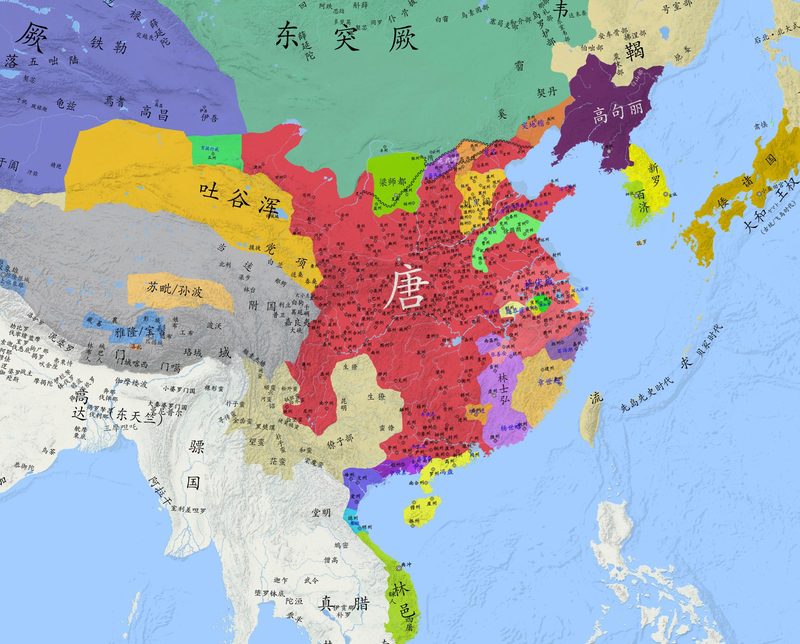
The Turks were a nomadic people of northern China who arose around the Altai Mountains in the mid-6th century and later split into eastern and western branches. In early Tang the Eastern Turks were strong, controlled the area north of the Gobi, and often raided southward. In 626, just after Taizong took the throne, Illig Khan of the Eastern Turks led over 100,000 cavalry to the Bianqiao Bridge on the Wei River near Chang'an. Taizong came to the river and spoke with the khan across the water; they made a covenant and the Turks withdrew, an event called the “Covenant of the Wei River”. Taizong saw it as a humiliation and stepped up training. In 629 the Eastern Turks were weakened by internal strife and snowstorms, and Taizong sent the generals Li Jing, Li Ji and others to attack along several routes. In 630 Li Jing led 3,000 elite cavalry in a night raid on Dingxiang and routed the Turks, then defeated them again at the Yin Mountains and captured Illig Khan, ending the Eastern Turkic Khaganate. Taizong took an open policy toward the surrendered Turks: he settled them in what is now Inner Mongolia, kept their tribal organization, appointed their leaders as military governors and prefects, and many Turkic nobles came to serve at court. In the same year, leaders of northern and northwestern peoples gathered in Chang'an and asked Taizong to be their “Heavenly Khan”, the common ruler of all peoples. Tang later defeated the Tuyuhun, Gaochang and the Western Turks, and set up the Anxi and Beiting Protectorates to strengthen its control of the Western Regions. Han and minority peoples lived together and intermarried, ethnic integration advanced, and many minority generals served in Tang, making this an important period in the development of a unified multi-ethnic state.
References
Text and images from Wikipedia are used under CC BY-SA and their respective licenses