Spring and Autumn770–476 BC
Duke Huan of Qi and the Struggle for Hegemony
Early Spring and Autumn
With the Zhou royal house weak, states vied for supremacy; Duke Huan of Qi, reformed by Guan Zhong and using the slogan “revere the king, expel the barbarians,” became the first hegemon.
View on the timeline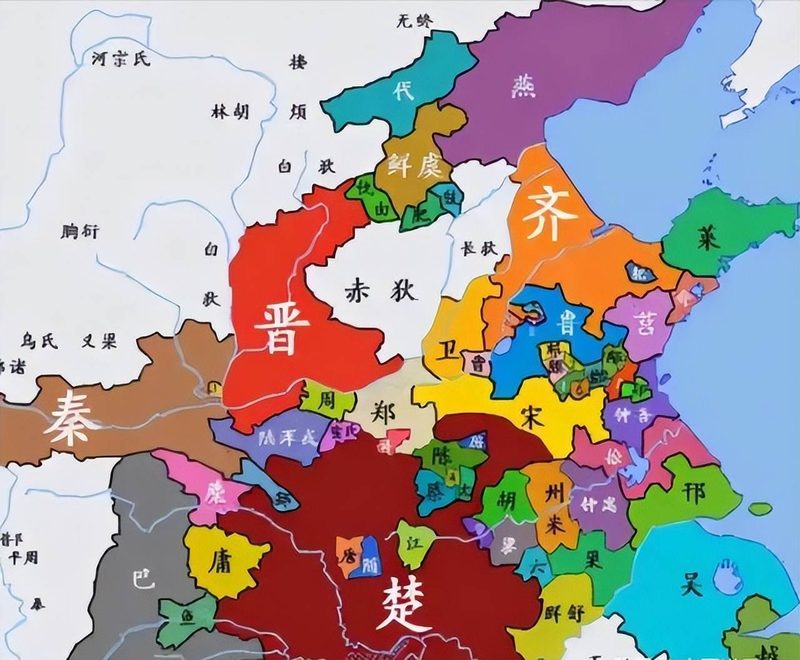
After King Ping's move east, the Zhou royal house declined; its direct domain was only around Luoyi, it could no longer control the lords, who no longer paid tribute regularly, and the royal finances came to depend on lords' support. Some large states, to expand their power, annexed one another and competed for hegemony, controlling affairs in the realm and in effect taking the place of the Son of Heaven, known as the Spring and Autumn “struggle for hegemony.” The state of Qi, in northern Shandong, grew strong early thanks to fish and salt and developed industry and trade. After taking the throne, Duke Huan of Qi set aside old grudges and made Guan Zhong, who had once shot him, his chancellor, and carried out reforms: reorganizing government, taxing land by quality, developing agriculture, fish and salt and ironmaking, and combining military and administrative organization, greatly strengthening Qi. Duke Huan raised the slogan “revere the king, expel the barbarians,” helped Yan fend off the Shanrong, helped Xing and Wei resist the Di, and led an allied army against Chu, forcing it to sign a treaty. In 651 BC he convened the lords at Kuiqiu, where the Zhou king also sent a representative, and became the first hegemon of the Spring and Autumn period. Afterwards Duke Wen of Jin defeated Chu at Chengpu and became hegemon of the Central Plains; King Zhuang of Chu “asked about the tripods” and held sway for a time; Duke Mu of Qin dominated the western Rong; and late in the period Wu and Yue also moved north to contest hegemony. The wars of hegemony brought disaster to the people but also promoted ethnic integration and regional unification, while the Zhou royal house grew ever weaker and enfeoffment gradually collapsed.
References
Text and images from Wikipedia are used under CC BY-SA and their respective licenses