Western Zhou1046–771 BC
Western Zhou Enfeoffment System
Early Western Zhou
The Western Zhou enfeoffed kinsmen and meritorious officials as lords across the land, forming the ranks of king, lord, senior official and scholar-gentleman.
View on the timeline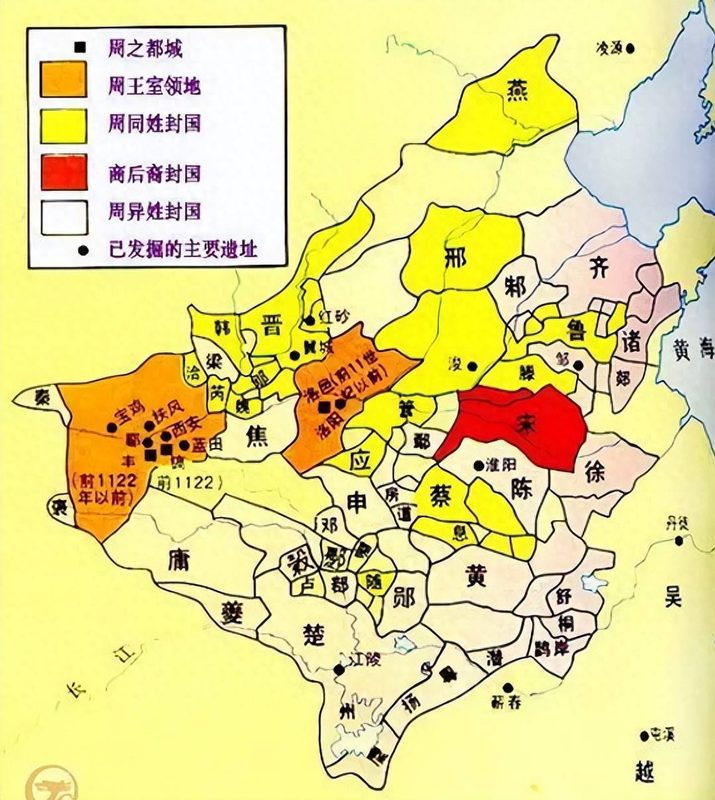
After the Western Zhou was founded, to stabilize its rule and secure the newly conquered lands, the king practiced the enfeoffment system: according to closeness of kinship and size of service, he granted kinsmen, meritorious officials and descendants of ancient rulers the authority to govern land and people and found feudal states, “enfeoffing relatives to be a screen for Zhou.” According to records, more than 70 states were enfeoffed in the early Zhou, including: Boqin, eldest son of the Duke of Zhou, in Lu (Qufu, Shandong); Lu Shang in Qi (Zibo, Shandong); a son of the Duke of Shao in Yan (Beijing); Shuyu in Tang (later renamed Jin, around Yicheng, Shanxi); and Weizi Qi, half-brother of King Zhou of Shang, in Song (Shangqiu, Henan), to pacify the Shang remnants. Lords had considerable independence in their states and could appoint officials, raise armies and levy taxes, but had to obey the king's orders, pay tribute regularly, join him in war and defend the royal house. Within their own lands they could in turn enfeoff senior officials, who enfeoffed scholar-gentlemen, forming the hierarchy of king, lord, senior official and scholar-gentleman. Alongside enfeoffment went the clan law centered on succession by the eldest son by the principal wife and a system of ritual and music distinguishing ranks. Enfeoffment extended Western Zhou rule to the Yellow and Yangtze river basins, strengthened control over the regions and promoted economic and cultural exchange and ethnic integration. But as the lords grew stronger, the Zhou royal house gradually declined, and by the Spring and Autumn period the enfeoffment system was breaking down and was replaced by the system of commanderies and counties.
References
Text and images from Wikipedia are used under CC BY-SA and their respective licenses