Shangc. 1600–1046 BC
Sanxingdui Site
Shang (excavated 1986)
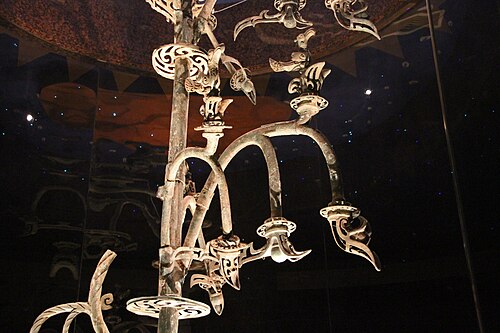
In 1986 sacrificial pits at Sanxingdui in Guanghan, Sichuan yielded a gold scepter, a bronze sacred tree and many bronze figures and masks, showing the distinctive ancient Shu civilization.
View on the timeline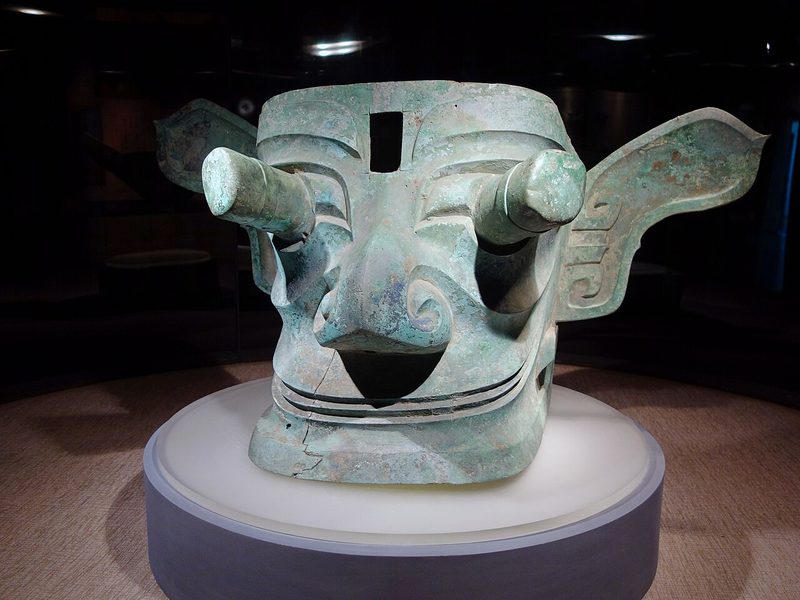
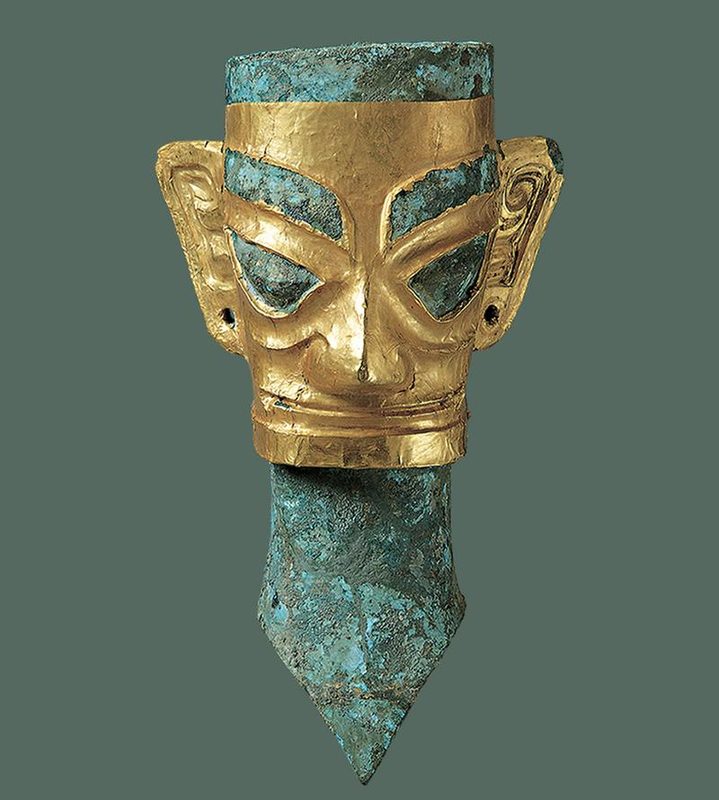
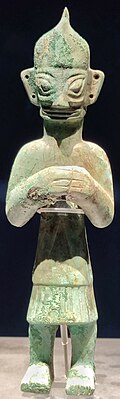
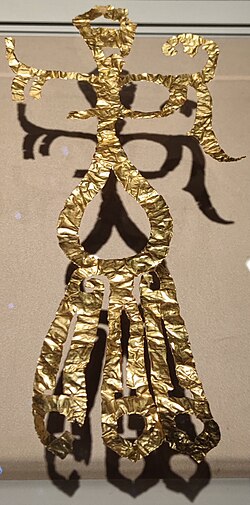
The Sanxingdui site is in Nanxing Town, Guanghan, Sichuan, on the northern Chengdu Plain, and is named for three artificial mounds at the site. In 1929 a local farmer, Yan Daocheng, found a pit of jade and stone objects while digging a ditch, and archaeologists have surveyed and excavated here many times since. In 1986 two large sacrificial pits were found one after another, yielding thousands of precious gold, bronze, jade, stone and ivory objects and stunning the world. The most important include a gold scepter 1.42 m long, covered in gold foil and engraved with human heads, fish and birds; a bronze sacred tree about 3.96 m high with divine birds perched on it; a bronze standing figure over 2.6 m tall, the tallest bronze figure of its age in the world; a bronze mask 1.38 m wide with protruding eyeballs; and many strangely shaped bronze heads and masks. The main dates of Sanxingdui are about 4,500–3,000 years ago, with the sacrificial pits roughly late Shang. It was the capital of the ancient Shu state, with a city area of about 3.6 square kilometers. Sanxingdui culture has strong local features but also close links to Central Plains Shang culture and middle Yangtze culture, showing that Chinese civilization originated in a pluralistic yet unified way. Since 2019 six new sacrificial pits have been found, producing gold masks, bronze altars and many other important objects. The Jinsha site in Chengdu is regarded as another center of ancient Shu civilization after Sanxingdui.
References
Text and images from Wikipedia are used under CC BY-SA and their respective licenses