Shangc. 1600–1046 BC
Houmuwu Ding and Shang–Zhou Bronzes
Late Shang
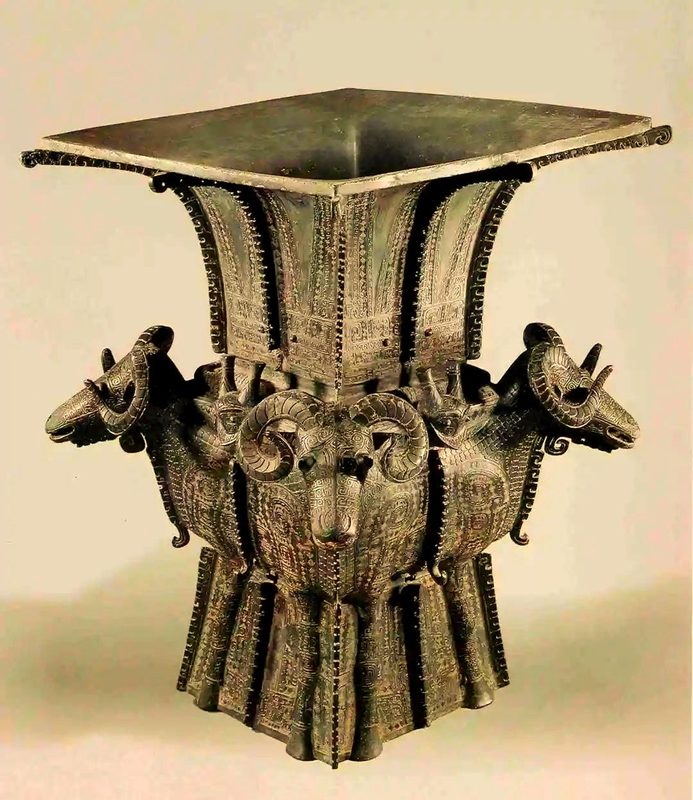
Shang and Zhou bronzes were varied and highly skilled; the Houmuwu ding, 832.84 kg, is the heaviest known ancient Chinese bronze, and the Four-Ram Zun is exquisitely shaped.
View on the timeline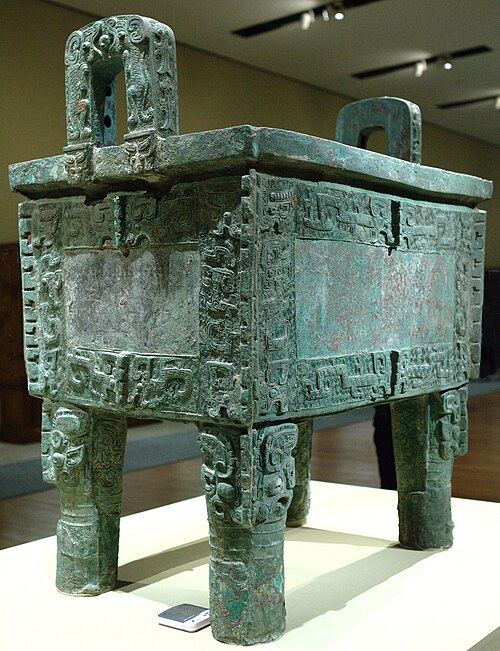
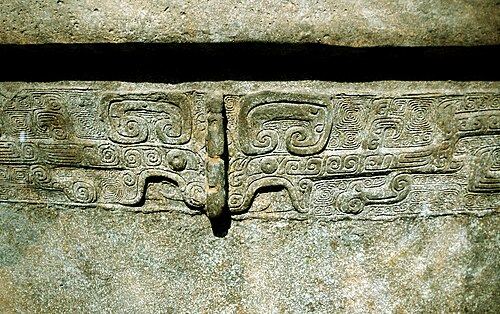
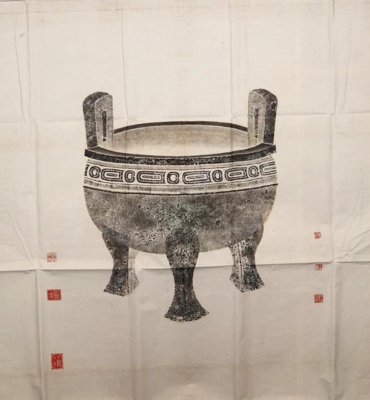
Copper objects have been found at several sites dating 5,000–4,000 years ago. In the Xia, Shang and Zhou, bronze casting was highly developed, with more objects in great variety, used mainly for food and drink, sacrifice and war. Ritual vessels such as the ding, jue, jia, gui and zun became symbols of nobles' rank and even of state power. Shang nobles loved wine, and the number of bronze wine vessels marked noble rank; the Western Zhou valued ritual, and the numbers of ding and gui marked rank: nine ding and eight gui for the Son of Heaven, seven and six for feudal lords, five and four for senior officials. Craftsmen had by then accurately mastered the ratios of copper, tin and lead and cast fine objects in clay molds, with decorations mostly of taotie, kui dragons and cloud-and-thunder patterns. The Houmuwu ding is a square bronze ding used in late Shang royal sacrifices, found in 1939 at Wuguan village, Anyang, Henan. It stands 133 cm tall, with a mouth 112 cm long and 79.2 cm wide, and weighs 832.84 kg, the heaviest known ancient Chinese bronze; it is named for the three characters “Houmuwu” cast inside (formerly “Simuwu ding”). It is generally thought to have been cast by a Shang king to honor his mother, “Wu.” The Four-Ram Zun, found in Ningxiang, Hunan, has a curled-horn ram at each corner, an imposing form and the largest of the Shang square zun. Western Zhou pieces such as the Li gui, Mao Gong ding and Da Yu ding bear precious inscriptions. Shang and Zhou bronzes represent the peak of world bronze civilization of their time; the Houmuwu ding and Four-Ram Zun are now in the National Museum of China.
References
Text and images from Wikipedia are used under CC BY-SA and their respective licenses