Neolithicc. 10,000 years ago–2070 BC
Jiahu Site
Over 8,000 years ago
The Jiahu site in Wuyang, Henan, over 8,000 years old, yielded charred rice grains, bone flutes and incised symbols; the flutes are among the world's earliest.
View on the timeline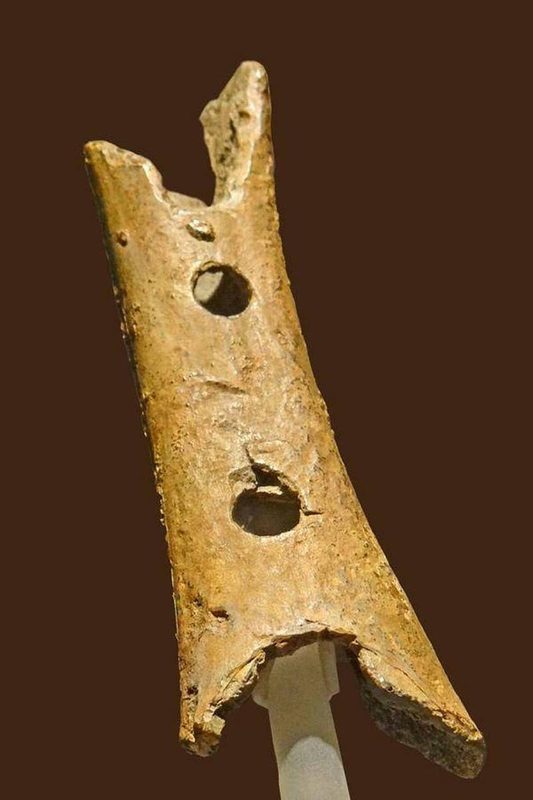
The Jiahu site lies in Jiahu village, Beiwudu Town, Wuyang County, Henan, in the upper Huai River basin. Dated to about 9,000–7,500 years ago, it is an important settlement of the Peiligang culture of the early Neolithic. Excavated repeatedly since 1983, it has yielded house foundations, storage pits, pottery kilns and several hundred burials. The people of Jiahu could already make fine stone, pottery and bone objects. Charred rice grains and domestic pig bones show that rice farming and animal raising were developing, and the site is important evidence of early rice agriculture in the Huai River basin. Jiahu's most famous finds are bone flutes made from the ulnae of red-crowned cranes. Dozens have been found, mostly with seven holes. Tests show they can produce musical tones including a seven-note scale and can play tunes, making them among the earliest and best-preserved playable instruments known in the world. Some tortoise shells and bone objects placed in graves bear carved symbols, some resembling Shang oracle bone script, which is valuable for studying the origin of Chinese characters. Researchers have also detected residues of a fermented drink made from rice, honey and hawthorn in pottery, considered among the world's earliest traces of alcohol. Jiahu shows the high material and spiritual culture of people in the Huai River basin more than 8,000 years ago. Some of the flutes are kept in the Henan Museum, where they are among its treasures, and Jiahu was named one of the “100 Great Archaeological Discoveries in 20th-Century China.”
References
Text and images from Wikipedia are used under CC BY-SA and their respective licenses