MingAD 1368–1644
Zheng He's Voyages
1405–1433
From 1405 to 1433 Zheng He led seven voyages to over 30 countries of Asia and Africa, reaching East Africa and the Red Sea, a landmark in the history of navigation.
View on the timeline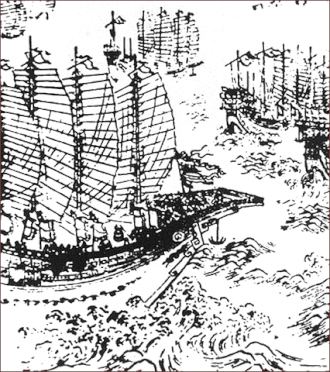
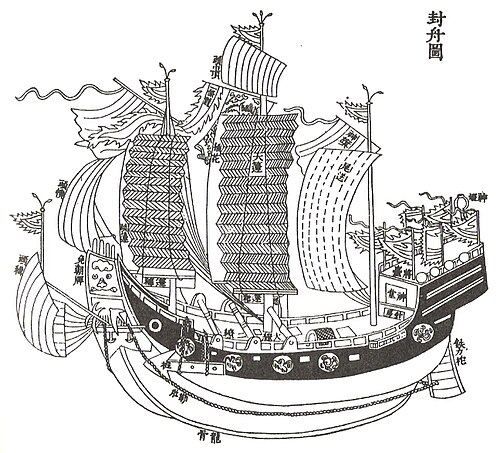
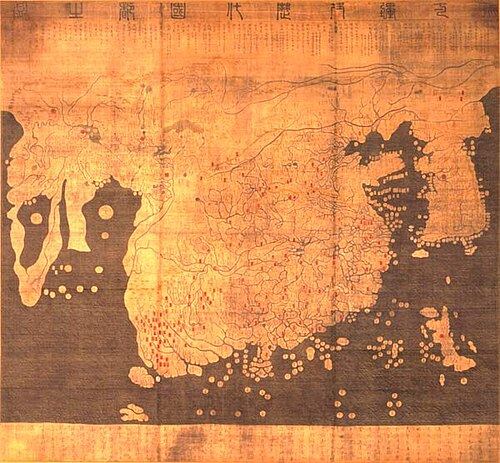
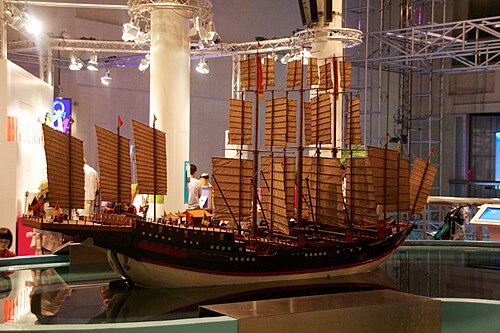
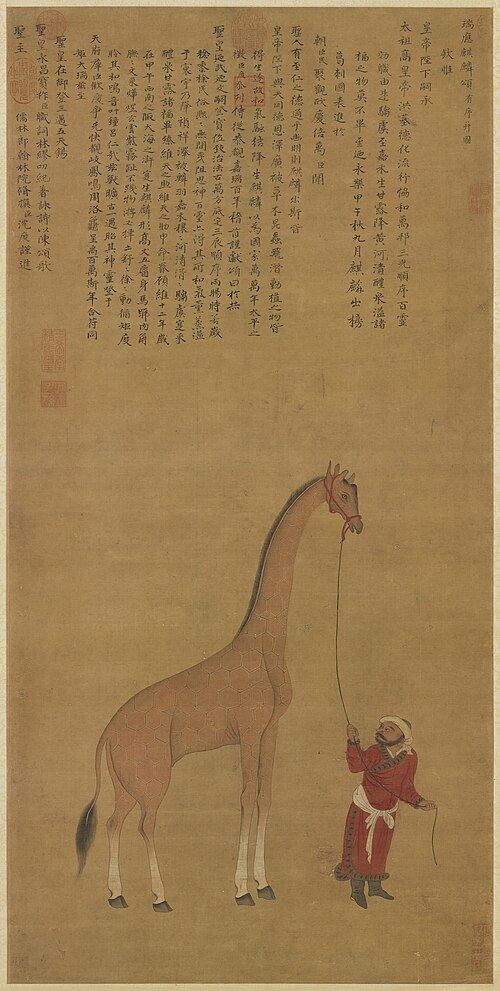
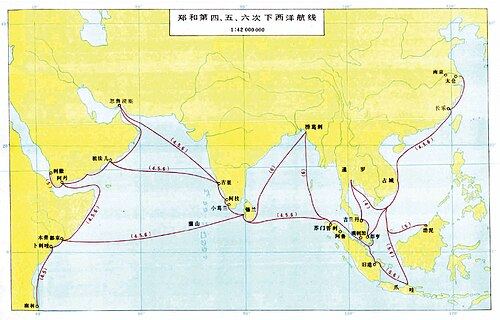
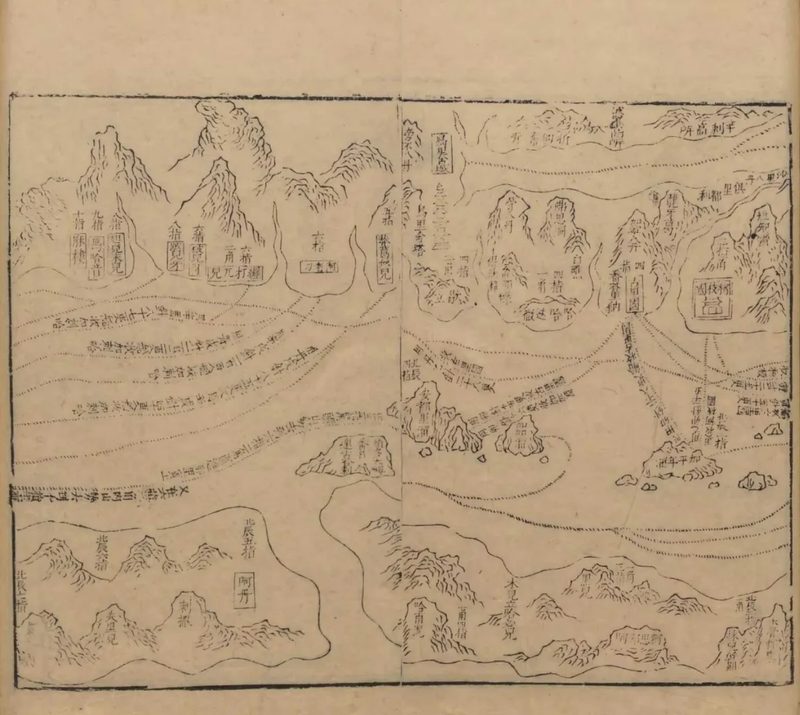
In the early 15th century the Ming economy was prosperous and its power great. The Yongle Emperor sent Zheng He with a fleet to the "Western Seas" (in the early Ming, Southeast Asia west of present-day Brunei and the Indian Ocean region), to "show China's wealth and strength" and develop friendly relations and trade with overseas countries. Zheng He (1371–1433), originally surnamed Ma with the childhood name Sanbao, was a Hui from Yunnan, captured after the Ming conquest of Yunnan and made a eunuch in the palace; he later followed Zhu Di, distinguished himself in the Jingnan Campaign, was granted the surname Zheng and promoted to Grand Director of the Directorate of Palace Attendants, and was known as the "Three-Jewel Eunuch". In 1405 Zheng He set out with over 27,000 men from Liujiagang in Suzhou, putting to sea via Changle in Fujian on the first voyage. Up to 1433 he made seven voyages in all, reaching more than thirty countries and regions of Asia and Africa, as far as the east coast of Africa and the Red Sea. The fleet at its largest had over 200 ships, and according to the History of Ming the biggest treasure ships were 44 zhang long and could hold a thousand people. The ships were loaded with silk, porcelain, tea, lacquerware, gold and silver for gifts and trade, bringing back spices, gems, medicines and rare birds and animals, and Bengal presented a giraffe. The fleet navigated by the compass and by "celestial navigation" using stars, making good use of monsoons and currents. Many countries sent envoys back with the fleet; on the return of the sixth voyage, over 1,200 envoys from sixteen countries and regions came together.
References
Text and images from Wikipedia are used under CC BY-SA and their respective licenses