MingAD 1368–1644
Founding of the Ming Dynasty
1368 · Yuan → Ming
In 1368 Zhu Yuanzhang proclaimed the Ming at Yingtian with the era name Hongwu; Ming forces took Dadu that year and the Yuan emperor fled north.
View on the timeline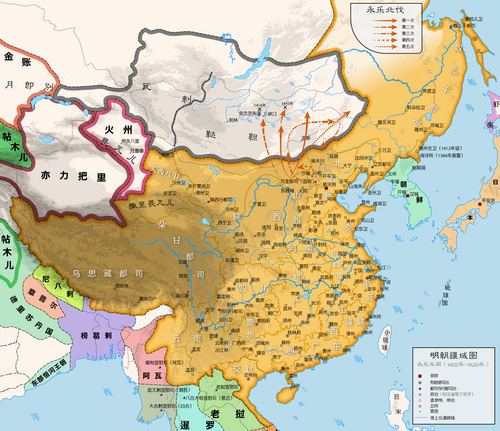
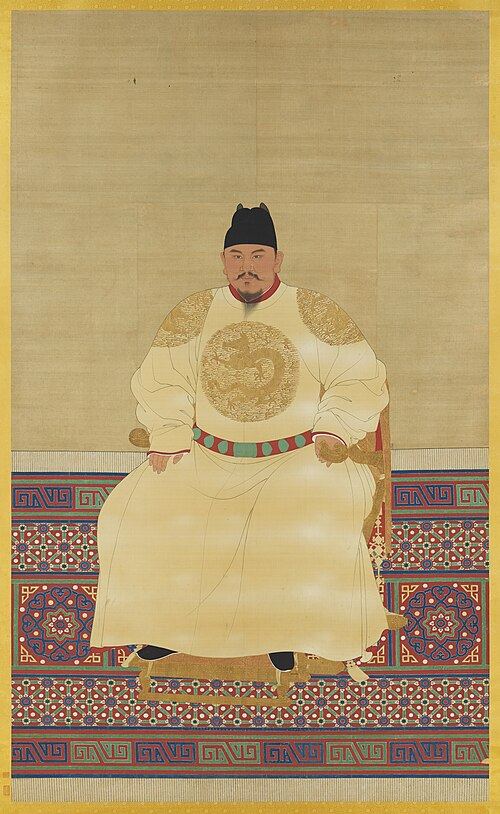
Zhu Yuanzhang (1328–1398) was from Zhongli in Haozhou (present-day Fengyang, Anhui), born to a poor peasant family. At seventeen, drought and plague struck his home region and his parents and brother died one after another; he was forced to become a monk at Huangjue Temple and later wandered begging for food. In 1352 he joined the Red Turban army led by Guo Zixing and gradually became a leader of the rebels. Following the strategy of "building high walls, storing up grain and being slow to proclaim himself king", he grew in strength and eliminated rival regimes such as those of Chen Youliang and Zhang Shicheng. In the first month of 1368 Zhu Yuanzhang proclaimed himself emperor at Yingtian (present-day Nanjing, Jiangsu), with the state name Great Ming and the era name Hongwu; he is known as the Ming Taizu or Hongwu Emperor. That year he sent Xu Da and Chang Yuchun north, and Ming forces captured the Yuan capital Dadu; the Yuan emperor Shundi fled to Shangdu, ending Yuan rule in the Central Plains. Ming forces then pacified Sichuan, Yunnan, Liaodong and other regions and essentially unified the country. The Yuan remnants who withdrew to the steppe retained considerable strength, known as the "Northern Yuan", and stood off against the Ming for a long time. After the founding, noting the social devastation caused by the wars of the late Yuan, Taizu adopted a policy of rest and recovery: he encouraged peasants to open wasteland, ruled that reclaimed land belonged to the reclaimer and exempted it from taxes for three years; organized migrations and military farming colonies and built irrigation works; lightened taxes; and surveyed households and land, compiling the Yellow Registers of taxes and labor service and the Fish-scale Registers of land.
References
Text and images from Wikipedia are used under CC BY-SA and their respective licenses