Northern and Southern DynastiesAD 420–589
Carving of the Longmen Grottoes
After the Northern Wei moved its capital to Luoyang
Around Emperor Xiaowen's move of the Northern Wei capital to Luoyang, carving began on the Yi River banks; it lasted over four hundred years and left more than 2,300 niches and 100,000 statues.
View on the timeline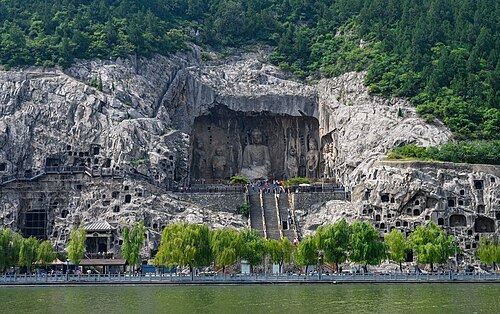
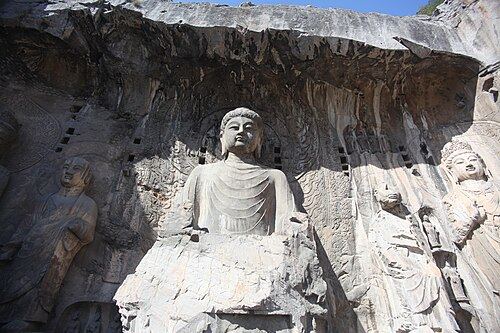
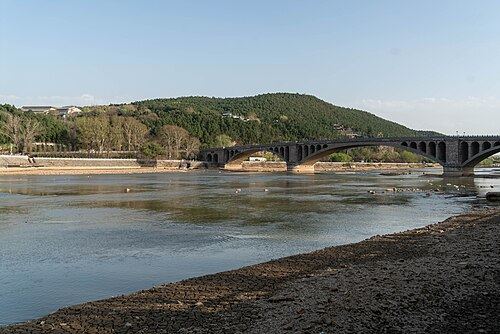
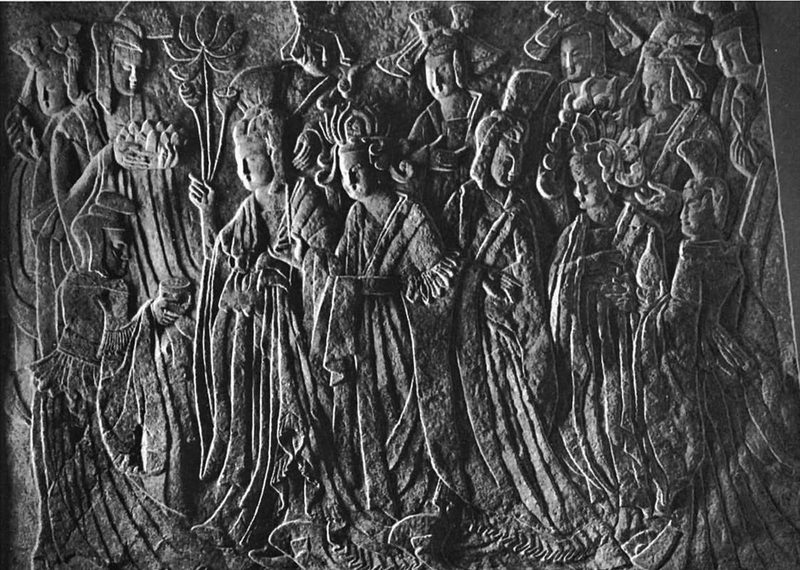
The Longmen Grottoes lie on Longmen Mountain and Xiangshan on both banks of the Yi River south of Luoyang, Henan; the two hills face each other with the Yi water between, like a gateway from afar, anciently called “Yique.” Around Emperor Xiaowen's move of the capital to Luoyang in AD 494, carving began here and continued through the Eastern Wei, Western Wei, Northern Qi, Sui and Tang to the Northern Song, for more than four hundred years, with the greatest number of statues from the Northern Wei and Tang. Longmen now has over 2,300 caves and niches, over 100,000 statues and 2,800 inscriptions. The Northern Wei Guyang Cave, Central Binyang Cave and Lotus Cave are the most representative; their statues have delicate faces and slender bodies with layered drapery, in the “graceful bones and slender forms” and “loose robes and wide belts” style, more sinicized than those at Yungang and reflecting the Chinese character of Buddhist art after Emperor Xiaowen's reforms. The relief Emperor and Empress as Donors, originally in the Central Binyang Cave, showed Emperor Xiaowen and his empress leading attendants in worship and was a masterpiece of ancient Chinese relief carving; sadly it was stolen in the 1930s and taken to the United States, where it is now in museums. The Tang was the high point of Longmen sculpture: the great Vairocana Buddha at Fengxian Temple stands over 17 m high with a full, rounded face and a kindly expression, and is said to have been carved in the likeness of Wu Zetian, who also donated 20,000 strings of cash for cosmetics. The “Twenty Pieces of Longmen” represent Wei stele calligraphy. The Longmen Grottoes, with the Mogao and Yungang caves, are called China's three great grottoes and were inscribed on the World Heritage List in 2000.
References
Text and images from Wikipedia are used under CC BY-SA and their respective licenses