Western Han202 BC–AD 8
Zhang Qian Opens the Western Regions
138 BC and 119 BC
In 138 BC and 119 BC Zhang Qian made two hazardous missions to the Western Regions, opening a route west from the Central Plains, a feat later praised as “boring through the void.”
View on the timeline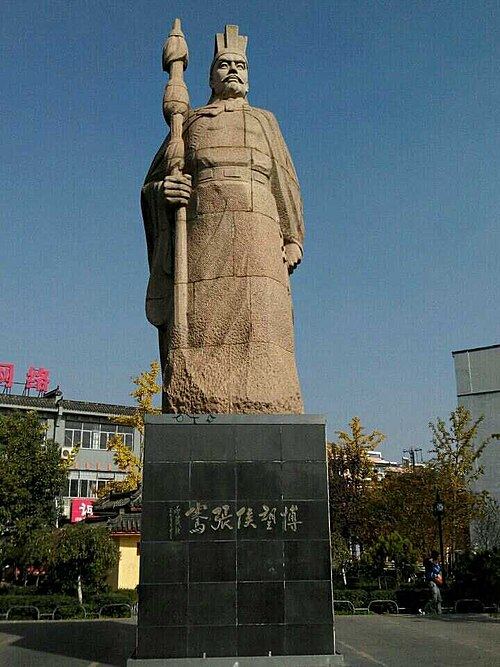
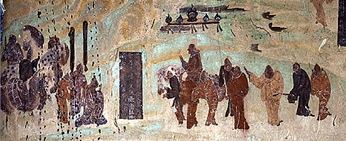
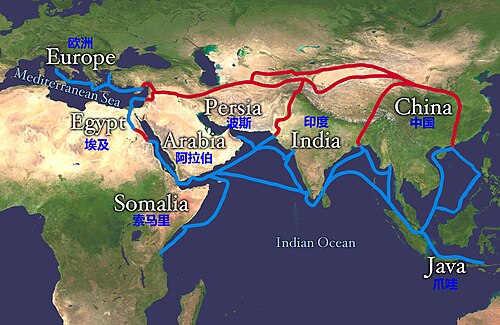
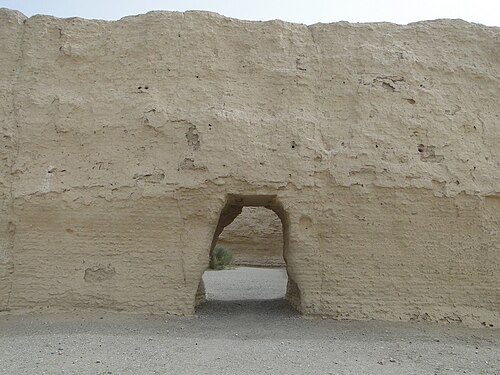
Under the Han, the lands west of Yangguan and Yumen passes (in today's Gansu) were called the Western Regions: in the narrow sense the area of modern Xinjiang, in the broad sense also Central and West Asia and beyond. In the early Western Han the region was divided among many small states, mostly under Xiongnu control, and the Xiongnu used it as a base for raids on the Central Plains. Emperor Wu learned that the Yuezhi had been driven west by the Xiongnu and resented them, so he called for envoys to seek an alliance against the Xiongnu. The court attendant Zhang Qian volunteered. In 138 BC he left Chang'an with over a hundred men. He was held by the Xiongnu for ten years and even married and had a son there, but never gave up his Han envoy's credentials. He eventually escaped and reached the Yuezhi by way of Dayuan and Kangju, only to find them settled in new lands and unwilling to fight the Xiongnu again. On the way back he was detained by the Xiongnu for over a year more, and reached Chang'an in 126 BC with only two of his original party. In 119 BC, after the Han defeated the Xiongnu, Zhang Qian went west a second time, reached the Wusun, and sent deputies to Dayuan, Kangju, the Yuezhi, Parthia, Shendu (India) and other states. Envoys from the Western Regions then visited Chang'an in turn, and contacts grew steadily. Zhang Qian was ennobled as Marquis of Bowang. His missions opened the way to the Western Regions and Central Asia, which Sima Qian called “boring through the void.” They laid the groundwork for the Silk Road, promoted economic and cultural exchange, and prepared the way for the Han to set up the Protector General of the Western Regions.
References
Text and images from Wikipedia are used under CC BY-SA and their respective licenses