Qin221–207 BC
Chen Sheng and Wu Guang Uprising
209 BC
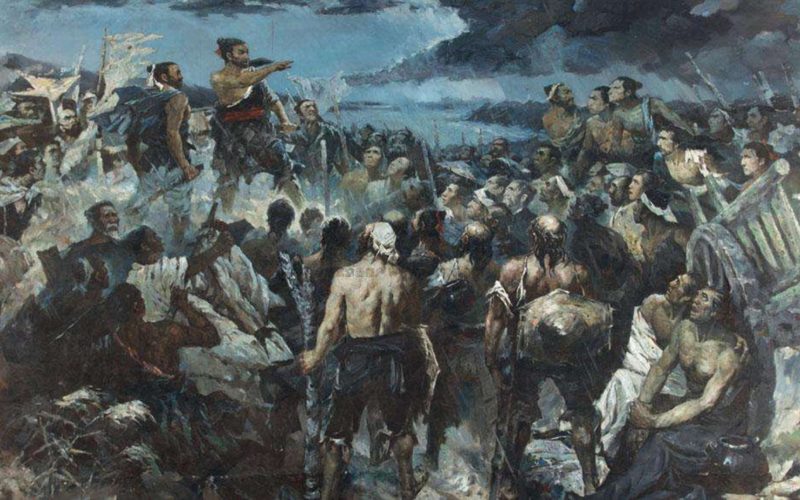
In 209 BC Chen Sheng and Wu Guang rose at Daze Township, crying “Are kings and nobles born to their rank?”, set up the Zhang Chu regime and began the uprisings against Qin.
View on the timeline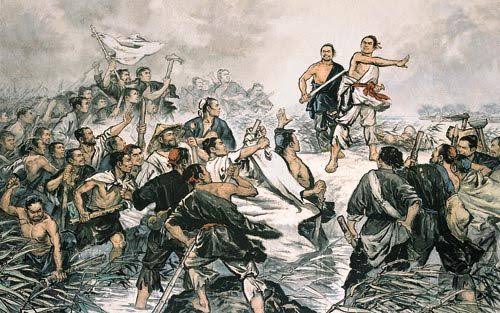
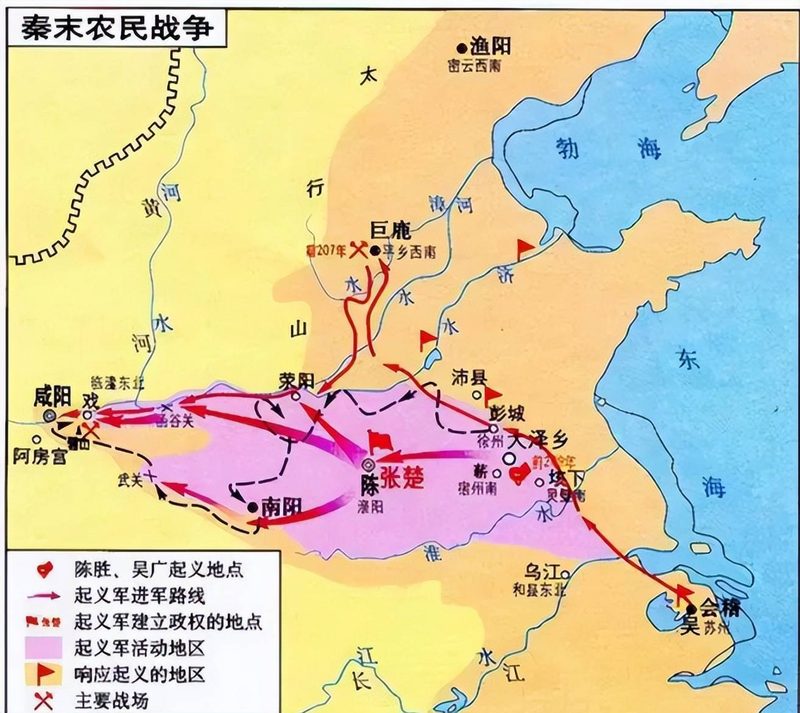
After the Qin dynasty was founded, its rulers were impatient and tyrannical. Qin Shi Huang levied heavy taxes and conscripted labor and soldiers on a large scale: more than 700,000 for building the Mount Li tomb and Epang Palace, 500,000 for the campaign against the Baiyue and 400,000 for the Great Wall, when the country's population was about 20 million. Qin laws were harsh and punishments cruel, and one person's crime implicated relatives and neighbors. After Qin Shi Huang's death his son Hu Hai, the Second Emperor, took the throne and ruled still more brutally, and social conflict reached an unprecedented pitch. In 209 BC the court conscripted 900 poor peasants to garrison Yuyang (southwest of present-day Miyun, Beijing). When the column reached Daze Township in Qi County (southeast of present-day Suzhou, Anhui), days of heavy rain blocked the road and they could not arrive on time. Under Qin law, soldiers who missed the deadline were to be beheaded. Chen Sheng and Wu Guang killed the officers escorting them and called for revolt. Chen Sheng shouted the slogan “Are kings, nobles, generals and ministers born to their rank?” They “cut wood for weapons and raised bamboo poles for banners,” flew the banner of “Great Chu,” and rallied support with devices such as the “cinnabar writing in the fish's belly” and the “fox cry by the campfire.” The rebels quickly took Chen County (present-day Huaiyang, Henan), where Chen Sheng declared himself king with the state name “Zhang Chu.” People everywhere rose in response, killing Qin officials, and the anti-Qin struggle spread across the country. Later the rebels' westward advance was checked, Chen Sheng was killed by a traitor and Wu Guang by his own officers, and the uprising failed after about half a year.
References
Text and images from Wikipedia are used under CC BY-SA and their respective licenses