Eastern HanAD 25–220
Xiping Stone Classics
175
The Xiping Classics were carved onto stone in the Han era.
View on the timeline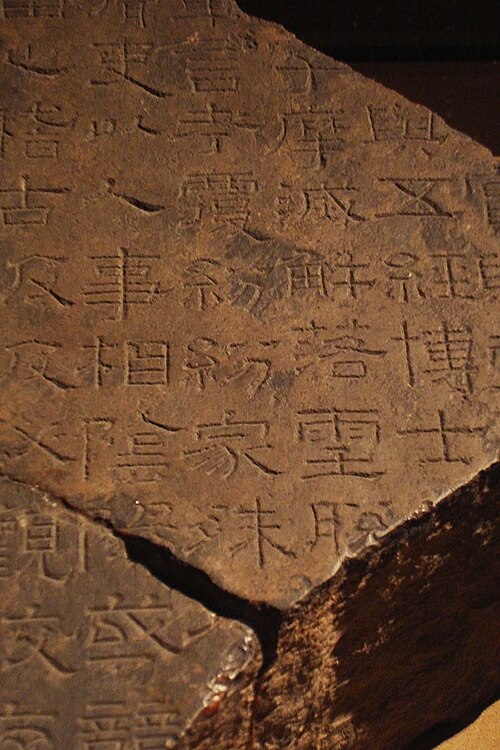
Image: Editor at Large · CC BY-SA 2.5 · Original
The Xiping Stone Classics were a set of Confucian texts carved on stone stelae at the Imperial Academy in Luoyang during the Eastern Han, beginning in 175 CE and completed around 183. The project was associated with Cai Yong and other scholars who sought to establish authoritative written versions of the classics and reduce discrepancies among copied texts and schools of interpretation. The inscriptions covered seven canonical works, including the Book of Changes, Book of Documents, Book of Songs, Book of Rites, Spring and Autumn Annals, Classic of Filial Piety, and Analects. Scholars and students could consult the stone texts, making the project a public expression of the court’s commitment to classical learning and textual standardization. The stelae were later damaged, moved, and reused; the original installation does not survive intact. Counts of stones and characters depend on historical descriptions and fragmentary evidence. Inscribing a text in stone could stabilize a particular wording, but it could not settle all interpretive disputes. The project influenced later traditions of stone classics and remains valuable for studying Han script, education, and the transmission of Confucian texts.
References
Text and images from Wikipedia are used under CC BY-SA and their respective licenses