People's Republic of China1949–present
The Chinese Dream and the “Four Comprehensives”
2012–2015
In 2012 Xi Jinping put forward the Chinese Dream, followed by the “Four Comprehensives”; in 2015 a new development philosophy of innovation, coordination, green, open and shared growth was proposed.
View on the timeline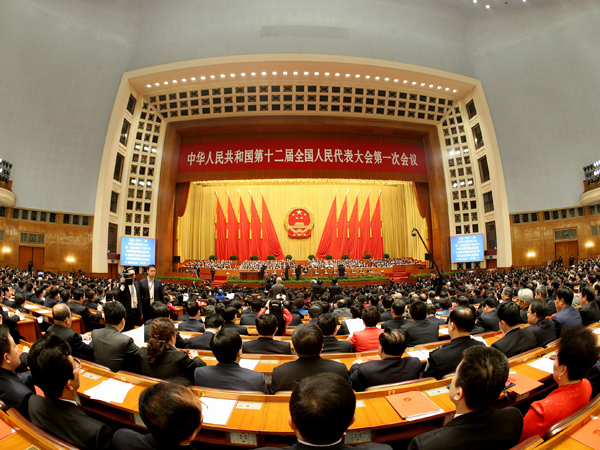
In November 2012, while visiting the exhibition The Road to Rejuvenation, Xi Jinping said: “Realizing the great rejuvenation of the Chinese nation is the greatest dream of the Chinese nation in modern times.” In 2013, at the first session of the 12th National People’s Congress, he elaborated the meaning of the Chinese Dream: national prosperity, national rejuvenation and the people’s happiness. To achieve the “Two Centenary Goals,” namely completing a moderately prosperous society in all respects by the Party’s centenary and building a prosperous, democratic, culturally advanced, harmonious and beautiful modern socialist country by the centenary of the People’s Republic, the Party Central Committee gradually formed the “Four Comprehensives” strategy: building a moderately prosperous society in all respects, deepening reform, advancing the rule of law and strictly governing the Party. In 2013 the Third Plenary Session of the 18th Central Committee adopted a decision on comprehensively deepening reform; in 2014 the Fourth Plenary Session adopted a decision on comprehensively advancing law-based governance, and a National Constitution Day was established. In 2015 the Fifth Plenary Session proposed the new development philosophy of innovation, coordination, green, open and shared development. The state also adopted a targeted poverty alleviation approach and launched a campaign to eliminate poverty. The Chinese Dream, the “Four Comprehensives” and the new development philosophy pointed the way for China’s development in the new era.
References
Text and images from Wikipedia are used under CC BY-SA and their respective licenses