People's Republic of China1949–present
Macao’s Return to China
20 December 1999
On 20 December 1999 China resumed the exercise of sovereignty over Macao and the Macao Special Administrative Region was established, a successful application of “one country, two systems.”
View on the timeline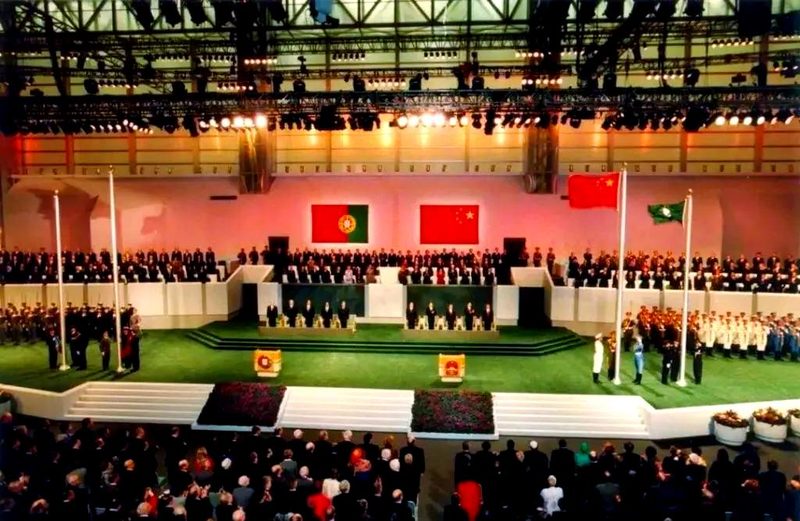
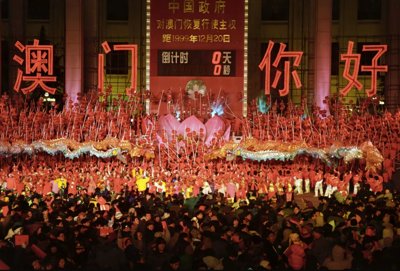
Macao has been Chinese territory since ancient times. In 1553 the Portuguese obtained the right to reside in Macao, and after the Opium War they gradually occupied it. When China and Portugal established diplomatic relations in 1979, the two sides confirmed that Macao was Chinese territory under Portuguese administration, and that the question would be settled by negotiation at an appropriate time. In April 1987 the two governments signed a joint declaration on the question of Macao, announcing that China would resume the exercise of sovereignty over Macao on 20 December 1999 and, under “one country, two systems,” establish the Macao Special Administrative Region with “Macao people ruling Macao” and a high degree of autonomy, with Macao’s existing social and economic systems and way of life unchanged for fifty years. In 1993 the National People’s Congress adopted the Basic Law of the Macao Special Administrative Region. In May 1999 Edmund Ho was elected the first Chief Executive. From late on 19 December to the early hours of 20 December 1999, the Chinese and Portuguese governments held a handover ceremony in Macao; the flag of the People’s Republic of China and the flag of the Macao SAR rose slowly, and President Jiang Zemin announced that China had resumed the exercise of sovereignty over Macao and that the Macao SAR was formally established. The song “Song of the Seven Sons: Macao,” with its line “Do you know that ‘Macau’ is not my true name,” voiced the feelings of Macao’s people about returning to the motherland. After the return, Macao’s economy grew quickly and society remained harmonious and stable. The returns of Hong Kong and Macao were an important step in washing away a century of national humiliation and achieving complete national reunification.
References
Text and images from Wikipedia are used under CC BY-SA and their respective licenses