People's Republic of China1949–present
Socialist Transformation Largely Completed
1953–1956
From 1953 China carried out socialist transformation of agriculture, handicrafts and capitalist industry and commerce, largely completed by the end of 1956, establishing the basic socialist system.
View on the timeline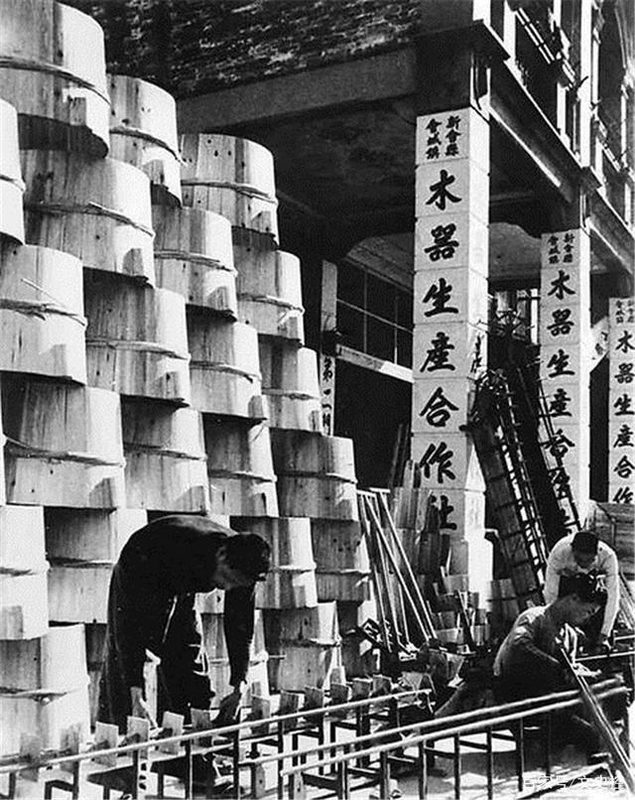
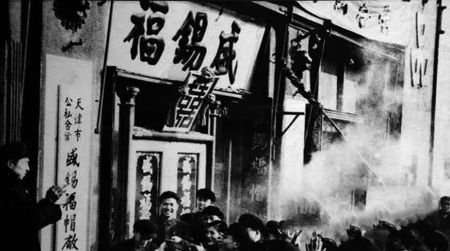
After the founding of New China, the country was in a period of transition from New Democracy to socialism. In 1953 the Party Central Committee formally put forward the general line for the transition period: over a fairly long time, to gradually achieve socialist industrialization and gradually carry out socialist transformation of agriculture, handicrafts and capitalist industry and commerce, known as "one industrialization and three transformations." After land reform, peasants had land, but agriculture was still small-scale peasant farming by individual households. The state therefore guided peasants along the road of mutual aid and cooperation, from mutual-aid teams to elementary and then advanced agricultural cooperatives, gradually changing private ownership of the means of production to collective ownership. Handicrafts were also organized into cooperatives. For capitalist industry and commerce the state adopted a policy of peaceful redemption, using state-capitalist forms such as processing orders, state purchase and marketing, and joint state-private operation to turn capitalist private ownership gradually into socialist public ownership. In early 1956 a high tide of socialist transformation swept the country. In joint state-private enterprises, capitalists received a fixed interest of 5 percent a year on their shares. By the end of 1956 China had largely completed the socialist transformation of agriculture, handicrafts and capitalist industry and commerce, the basic socialist system was preliminarily established, and China entered the primary stage of socialism. The transformations turned private ownership of the means of production into socialist public ownership, but they also suffered from problems such as excessive haste, crude work, changes made too fast and forms that were too simple and uniform.
References
Text and images from Wikipedia are used under CC BY-SA and their respective licenses