People's Republic of China1949–present
Peaceful Liberation of Tibet
1951
In May 1951 the Central People's Government and the Tibetan local government signed the Seventeen Point Agreement, peacefully liberating Tibet and unifying the mainland.
View on the timeline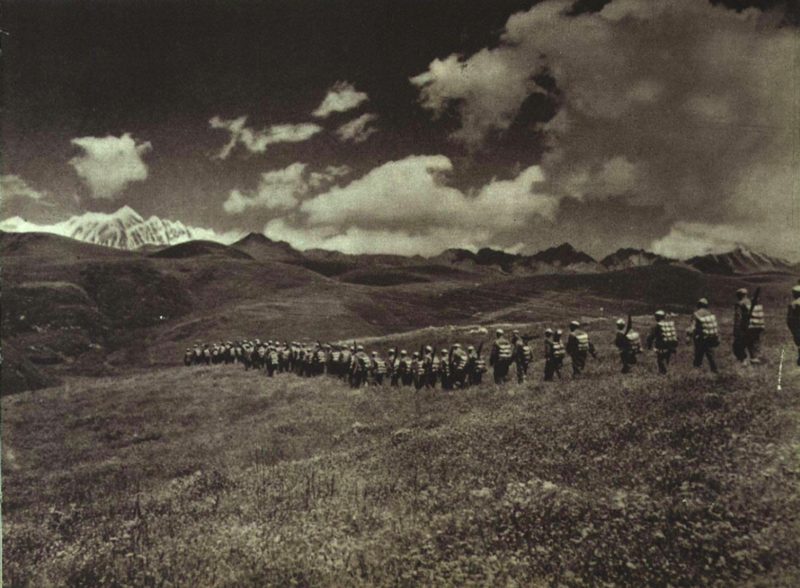
Tibet has been part of China's territory since ancient times. On the eve of New China's founding, some upper-class figures in the Tibetan local government, backed by foreign forces, tried to split Tibet from China and staged the "expulsion of Han" incident. At the time of the founding ceremony in 1949 the 10th Panchen Erdeni, then at Kumbum Monastery in Qinghai, telegrammed Mao Zedong and Zhu De asking for early liberation of Tibet. To uphold national sovereignty and territorial integrity, the Central People's Government decided to liberate Tibet peacefully. In October 1950 the Liberation Army launched the Qamdo Campaign and liberated Qamdo, opening the door to peaceful liberation. The Tibetan local government then sent a delegation headed by Ngapoi Ngawang Jigme to negotiate in Beijing. On 23 May 1951 the Central People's Government and the Tibetan local government signed in Beijing the Agreement on Measures for the Peaceful Liberation of Tibet, known as the Seventeen Point Agreement. It provided that the Tibetan people would unite and drive imperialist aggressive forces out of Tibet and return to the big family of the motherland, the People's Republic of China; that under the unified leadership of the Central People's Government the Tibetan people would have the right of regional ethnic autonomy; that the Central Government would not alter the existing political system of Tibet; and that the religious beliefs and customs of the Tibetan people would be respected. In October the Liberation Army entered Lhasa. To support Tibet's development the Kang-Tibet (Sichuan-Tibet) and Qinghai-Tibet highways were built, both opening in 1954. The peaceful liberation of Tibet unified the mainland, strengthened ethnic unity and opened a new chapter in Tibet's history.
References
Text and images from Wikipedia are used under CC BY-SA and their respective licenses