Republic of ChinaAD 1912–1949
Outline Land Law of China and Land Reform
1947
The 1947 Outline Land Law of China abolished feudal land exploitation and gave land to the tillers; peasants in the liberated areas received land and rallied to support the army.
View on the timeline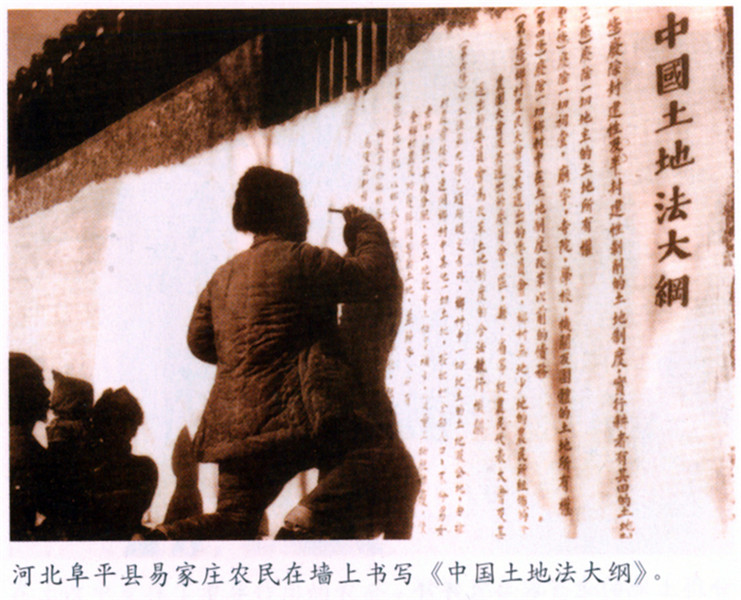
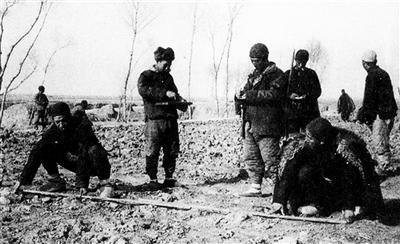
During the War of Resistance, to unite the landlord class against Japan, the Communist Party applied a policy of reduced rents and interest in the base areas. After victory, peasants urgently wanted land. The Party adjusted its land policy in time: on 4 May 1946 the Central Committee issued the Directive on the Land Question, known as the May Fourth Directive, which changed the policy from reducing rents and interest to confiscating landlords' land and distributing it to peasants, so that land would belong to those who tilled it. From July to September 1947 the Central Working Committee held the National Land Conference at Xibaipo in Pingshan County, Hebei, which drew up the Outline Land Law of China, promulgated by the Party Central Committee that October. The outline provided for abolishing the feudal and semi-feudal system of land exploitation and establishing land to the tiller; abolishing all landlords' land ownership; and having peasant associations take over all landlords' land and public land in the villages and, together with all other village land, distribute it equally according to the village's whole population, regardless of sex or age. After its promulgation a wave of land reform swept the liberated areas, and by autumn 1948 feudal exploitation had been eliminated in liberated areas of about 100 million people. Leftist deviations during the reform, such as infringing on middle peasants' interests and random beatings and killings, were later corrected. The success of land reform made peasants in the liberated areas masters of their own fate, led them to join the army and fight eagerly, and made the liberated areas a solid rear for victory. The outline was the guiding document for land reform in the war and laid a firm mass foundation for victory.
References
Text and images from Wikipedia are used under CC BY-SA and their respective licenses