Republic of ChinaAD 1912–1949
Nanchang Uprising
1 August 1927
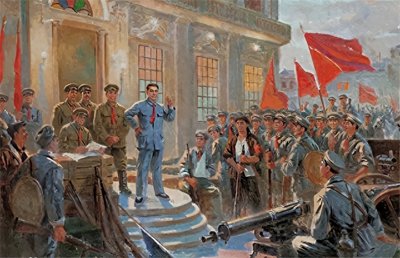
On 1 August 1927 Zhou Enlai, He Long, Ye Ting, Zhu De, Liu Bocheng and others led the Nanchang Uprising, firing the first shot in armed resistance to the Kuomintang reactionaries.
View on the timeline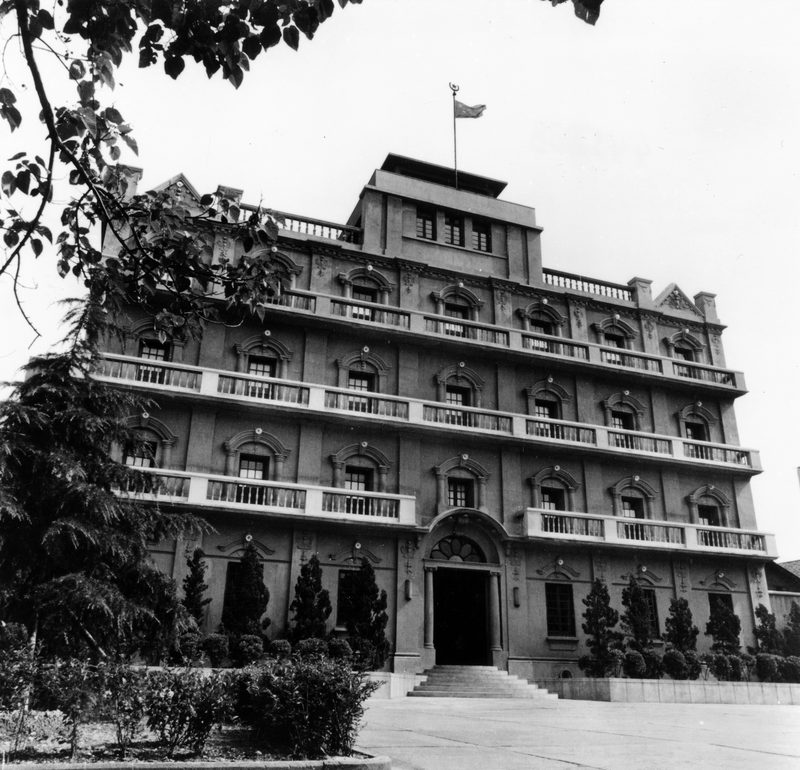
After the Great Revolution failed, the Kuomintang reactionaries' policy of bloody massacre provoked fierce resistance from the Communist Party and the revolutionary masses. Learning from the defeat the importance of independently holding armed forces, the Party decided to launch armed uprisings. In July 1927 the Central Committee decided to stage an uprising in Nanchang and set up a Front Committee headed by Zhou Enlai to lead it. The participants were mainly units that the Party controlled or influenced, including the National Revolutionary Army's 20th Army, the 24th Division of the 11th Army and the Nanchang Officers' Training Corps led by Zhu De, over 20,000 men in all. In the early hours of 1 August, led by Zhou Enlai, He Long, Ye Ting, Zhu De, Liu Bocheng and others, the rebels attacked the Kuomintang troops garrisoning Nanchang; after more than four hours of fighting they wiped out over three thousand defenders and took the city. Under the Central Committee's original plan, the rebel army then left Nanchang and marched south toward Guangdong. In the Chaozhou–Shantou area of Guangdong it was besieged by Kuomintang troops and its main force was defeated; the remnants, led by Zhu De and Chen Yi, later went up Jinggangshan and joined the forces led by Mao Zedong. The Nanchang Uprising fired the first shot of armed resistance to the Kuomintang reactionaries, marking the start of the Party's independent leadership of armed struggle and of building a people's army. In 1933 the Provisional Central Government of the Chinese Soviet Republic designated 1 August as the founding anniversary of the Chinese Workers' and Peasants' Red Army; it later became Army Day of the People's Liberation Army.
References
Text and images from Wikipedia are used under CC BY-SA and their respective licenses