Republic of ChinaAD 1912–1949
Lu Xun and The True Story of Ah Q
From 1921
Lu Xun, the founder of modern Chinese literature, published the first modern vernacular story “Diary of a Madman” in 1918 and later The True Story of Ah Q, exposing flaws in the national character.
View on the timeline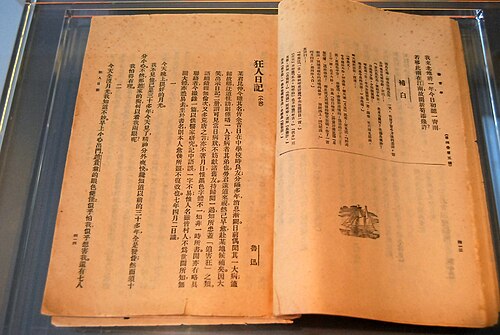
Lu Xun (1881–1936), original name Zhou Shuren, was from Shaoxing, Zhejiang. In 1902 he went to Japan to study medicine, but later concluded that curing the nation's spirit mattered more than curing bodies, so he gave up medicine for literature, hoping to change the national spirit through writing. In 1918 he published “Diary of a Madman” in New Youth, for the first time under the pen name Lu Xun. It was the first vernacular short story in modern Chinese literature, and through the “madman” exposed the “man-eating” nature of feudal ethics. In 1921 he published the novella The True Story of Ah Q, creating Ah Q, a peasant who suffers every oppression yet consoles himself with “spiritual victory”. It deeply exposed weaknesses of the national spirit and reflected the Xinhai Revolution's failure to truly mobilize the peasantry. Lu Xun's stories were collected in Call to Arms (Nahan), Wandering (Panghuang) and other volumes; he also wrote the prose collection Morning Blossoms Plucked at Dusk and the prose-poem collection Wild Grass. In his later years he wrote mainly essays, using a sharp pen to criticize social ills and fight reactionary forces, and was hailed as the “soul of the nation”. In 1930 he helped found the League of Left-Wing Writers. Mao Zedong praised him as the “chief commander of China's cultural revolution”, whose “bones were the hardest”. Modern Chinese literature flourished as never before: Guo Moruo's poetry collection The Goddesses set a new style, and Mao Dun's Midnight, Ba Jin's Family, Lao She's Rickshaw Boy and Cao Yu's play Thunderstorm are all representative works of the period. They reflected the changes of the era and the people's suffering, advanced intellectual emancipation and laid the foundations of modern Chinese literature.
References
Text and images from Wikipedia are used under CC BY-SA and their respective licenses