Southern SongAD 1127–1279
Song Overseas Trade and the Maritime Trade Offices
Northern and Southern Song
Song encouraged overseas trade, with Maritime Trade Offices at Guangzhou, Quanzhou and Mingzhou; its ships reached Arabia and East Africa, and trade income became an important source of revenue.
View on the timeline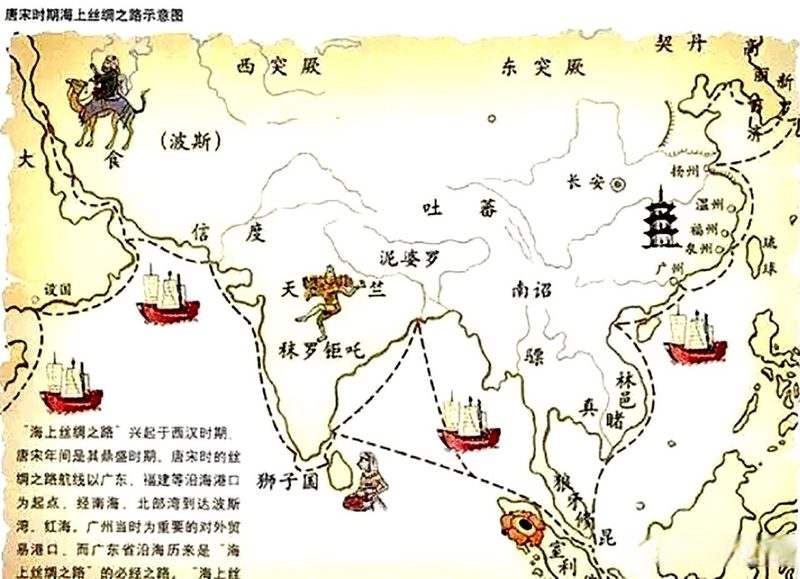
Song had advanced shipbuilding and navigation, the compass was coming into use at sea, and the northern overland Silk Road was blocked by Western Xia, Liao and others, so overseas trade flourished as never before, surpassing earlier ages, and Song became one of the world's major trading countries. Song rulers encouraged overseas trade; Emperor Gaozong said: “The profit of maritime trade is greatest; if well managed, it can yield millions.” The court set up Maritime Trade Offices at main ports such as Guangzhou, Quanzhou, Mingzhou (present-day Ningbo, Zhejiang) and Hangzhou to manage overseas trade, inspecting ships entering and leaving port and collecting customs duties. Song treated foreign merchants favorably, setting up “foreign quarters” (fanfang) at Guangzhou, Quanzhou and elsewhere for them to live in, headed by respected men chosen from among the merchants, and foreigners could also buy land, marry and have families in China. More than fifty countries and regions traded with Song, and Chinese ships reached nearby Korea and Japan and as far as Southeast Asia, India, the Arabian Peninsula and the east coast of Africa. Main exports were silk, porcelain, tea and copper coins; imports included spices, medicines, pearls, ivory and rhinoceros horn. Guangzhou and Quanzhou were world-famous trading ports; in late Southern Song Quanzhou gradually overtook Guangzhou, and in the Yuan it was called the “greatest port of the East”. Overseas trade income held an important place in Southern Song revenue, reaching two million strings in a year at most. The Southern Song shipwreck “Nanhai No. 1”, found in 1987 off Yangjiang, Guangdong, yielded great quantities of porcelain, ironware, and gold and silver objects, vividly attesting to the prosperity of the Song maritime Silk Road.
References
Text and images from Wikipedia are used under CC BY-SA and their respective licenses